Garlic Fish Tikka (Lasooni Fish Tikka)
by Viruthiga Veni
Loading rating...
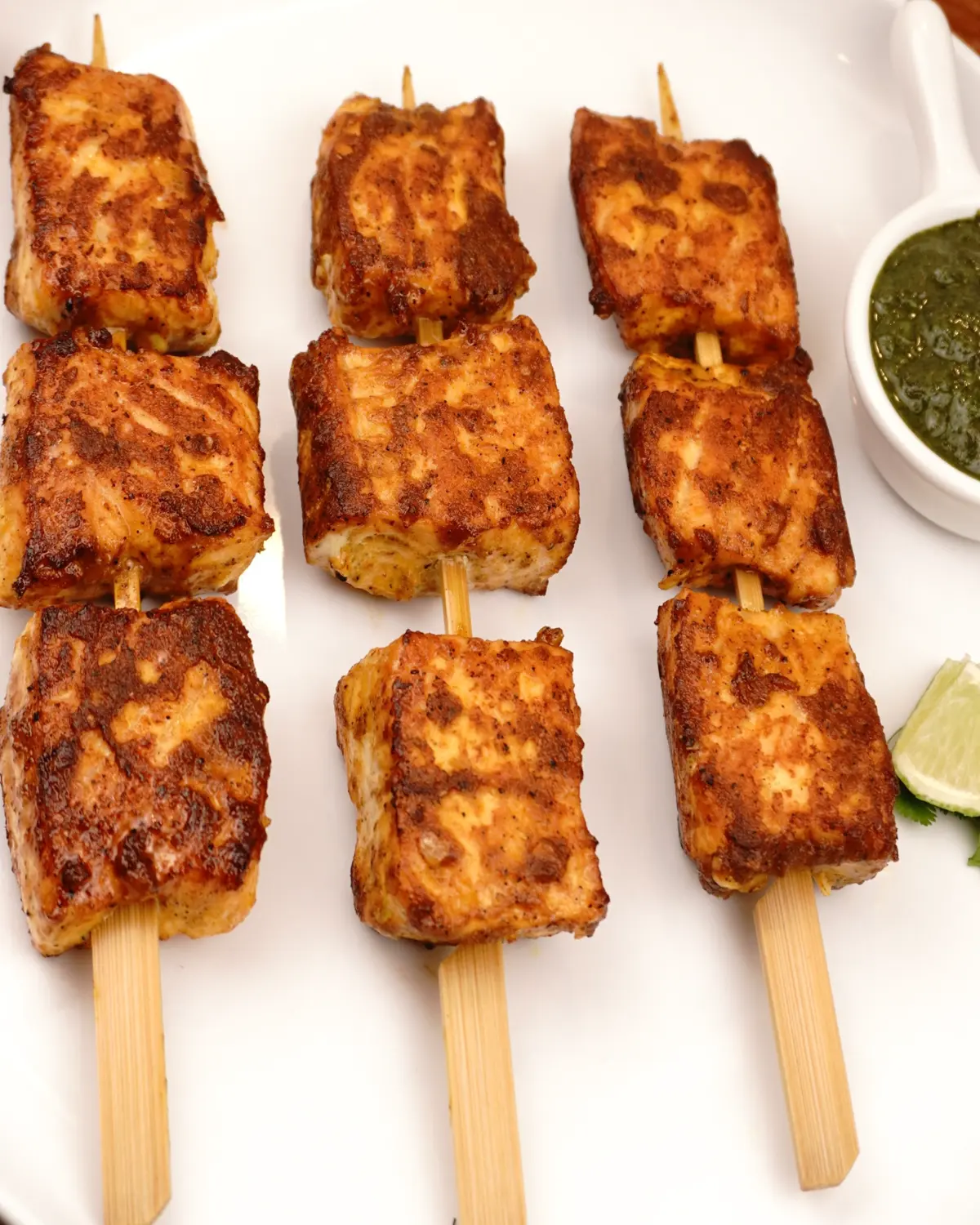
In Hindi, "lasooni" translates to garlic, and "tikka" refers to bite-sized pieces of meat or fish. To prepare this dish, small size pieces of fish are marinated in chopped garlic, yogurt and spices, then threaded onto skewers. Traditionally, these are cooked in a large clay oven known as a tandoor. At home, you can prepare them using a charcoal barbecue, an oven broiler or grill/normal pan . These garlic fish tikkas stay juicy and tender on the inside with a dark brown crust on the outside.
Ingredients
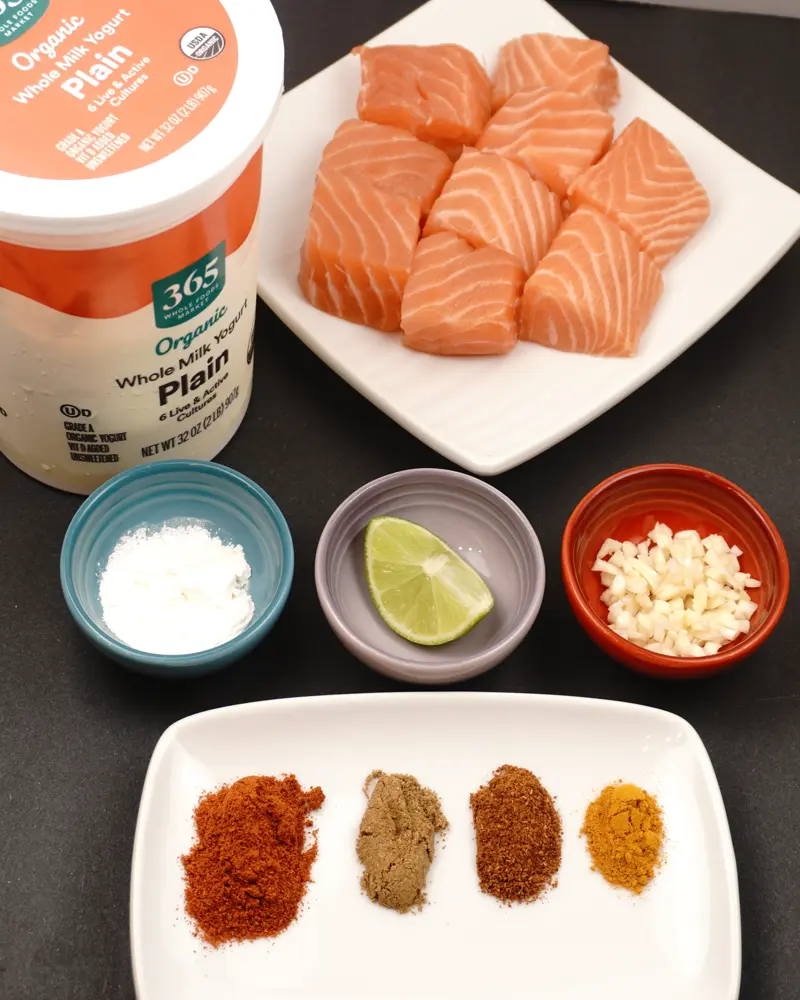
Skinless & Boneless fish pieces – 250 grams
Hung Curd – 2 tbsp (30 grams)
Finely chopped garlic – 2 tsp (4 to 5 small size cloves)
Lime juice – 1 tsp (1/4 medium size)
Turmeric powder – 1/4 tsp
Garam masala powder – ½ tsp
Zeera powder – ½ tsp
Chili powder – 1 tsp
Corn starch – ½ tbsp (4 grams)
Ghee – approx. 3 tbsp
Salt – ¾ tsp (approx.)
Prep fish pieces
Cut into Uniform Cubes
Ensure your fish fillet is completely patted dry, then place it on a clean cutting board. Using a sharp kitchen knife, gently cut the fillet into uniform, 1-inch bite-sized cubes. Keeping the pieces equal in size ensures they all cook at the exact same rate.
Prep Hung Yogurt/Curd
Hung Curd Consistency
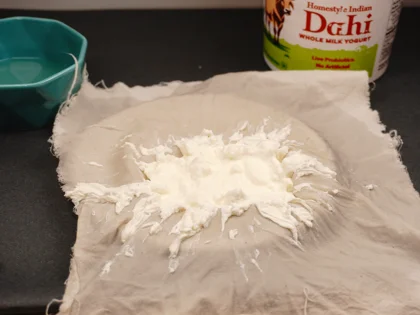
Aim for a medium hung curd consistency. If the curd is too runny, the marinade will be too watery, won't stick to the chicken, and will lack flavor. On the other hand, if the hung curd is too thick and stiff, it won't spread easily, making it difficult to coat the chicken. Preparing a medium hung curd ensures there is just a little liquid left, providing the perfect balance for a smooth, even spread.
How to Prep
Prep using either a quick method or the straining method:
Option A: The Quick Method (Ready in Minutes) Best if you are short on time. Requires a damp muslin or cheesecloth.
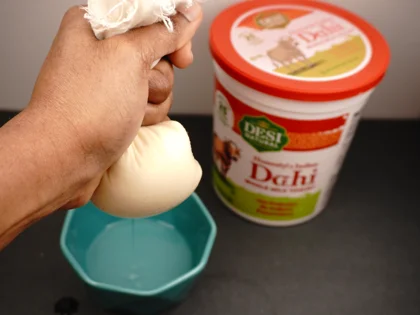
Pour & Gather: Pour about 50 g yogurt/curd into the center of your damp cloth. Bring the four corners together and lift it up to create a small pouch.
Squeeze Gently: Hold the top of the pouch tightly. Very gently press and squeeze the cloth along with the curd to release the excess liquid until it reaches a medium consistency.
Tip: Keep your touch light! Pressing too hard will force the creamy yogurt solids through the fabric, reducing your yield.
Option B: The Straining Method (Hands-Free) Best if you are planning ahead and want gravity to do the work.
The Setup: Pour about 50 g yogurt/curd directly into a fine-mesh strainer set over a bowl.
The Wait: Place the setup in the refrigerator and let it drain undisturbed for 3 to 4 hours until it reaches a medium, creamy consistency.
Measure for Marinade
Open the cloth and measure out 30 g (2 tbsp) of the medium hung curd for your marinade.
Tip: Always choose a whole-milk yogurt or curd. Full-fat options add much more flavor and creaminess to your tikka marinade than low-fat alternatives.
Prep First Marinade
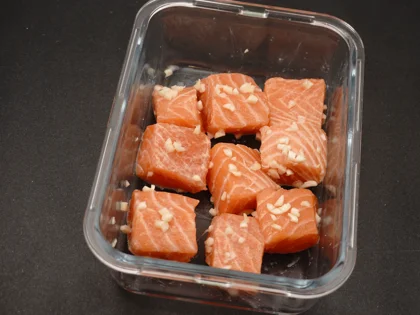
Coat the fish pieces and keep aside
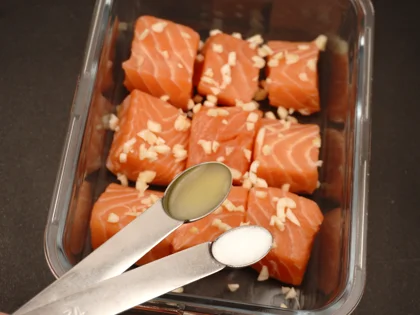
Add the following ingredients to the small fish pieces:
1 tsp lime juice
2 tsp garlic, finely chopped
1/2 tsp salt
Even Distribution - Instead of pouring them in one spot with a spoon, sprinkle it evenly over the fish pieces. Apply it to all sides of the pieces to ensure a uniform coating. Set aside.
Prep Second Marinade
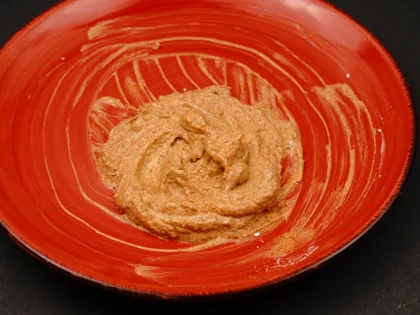
Mix the Marinade
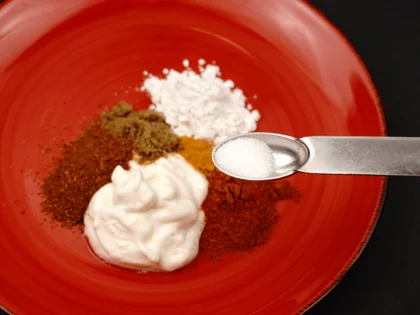
In a mixing bowl, combine
2 tbsp (30 grams) prepared hung curd
1/2 tbsp(4 grams) corn starch
1/2 tsp garam masala powder (Everest brand)
1/2 tsp cumin, ½ tsp turmeric and 1 tsp chili powder (Homemade)
Little salt.
Applying the Marinade
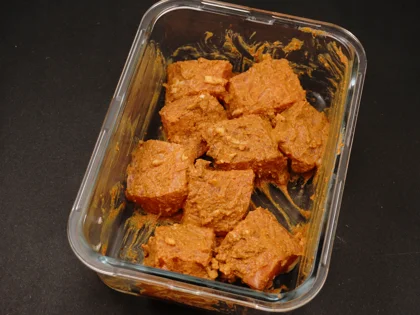
Using your hands, gently coat each piece of fish evenly. Repeat this process until every piece is fully and uniformly coated.
Note: Don't worry if the marinade feels a bit too thick in your bowl at first. Once you start applying it, the lime juice and salt from the first marinade will naturally help loosen it slightly on the surface of the fish, making it much easier to spread.
If the consistency is still too thick or too thin, adjust it using these steps:
If still too thick: Stir a teaspoon of yogurt directly into the marinade to loosen it up.
If too watery mistakenly: Mix in 1 to 2 teaspoons of cornstarch to help the marinade cling to the fish.
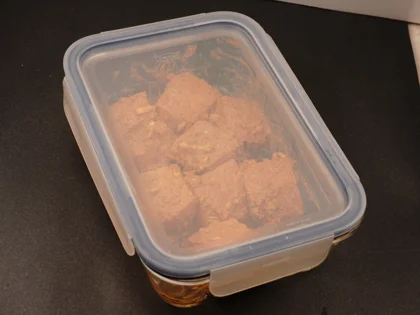
Place the marinated lasooni fish tikka in the room temperature for at least 45 minutes to 1 hour.
Assembling the Fish Skewers
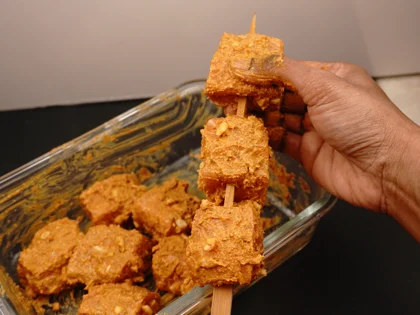
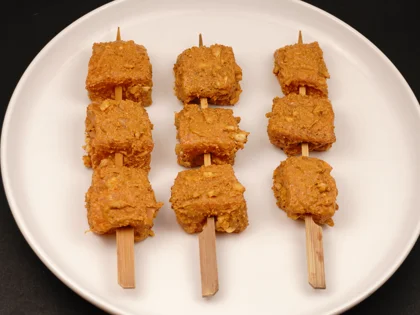
Skewer carefully: Thread each piece through the center so it stays stable on the skewer, leaving a small space between the pieces for even cooking.
The "Same-Size" Strategy: If your fish pieces vary in thickness, group them by size. Put thinner pieces on one skewer and thicker pieces on another so you can easily adjust their cooking times
Pan Selection and Cooking Spacing Guide
Choosing the right pan and managing your spacing is the key to achieving that perfect restaurant-style crust.
Why Non-Stick : It allows you to cook the fish skewers with less oil, prevents the meat from sticking, and makes cleanup much easier.
The Rule of Non-Stick: Always choose non-toxic cookware (like ceramic non-stick) that is completely free from harmful chemicals like PTFE and PFAS. This ensures your food stays safe and healthy, even when cooking over a hot flame.
Pan Options
Option 1: Ceramic Non-Stick (Medium Heat): A premium ceramic coating safely works at medium heat. Best for cooking fewer pieces at a time. Leave plenty of space between the fish skewers so moisture can escape, helping you attain a brown/dark brown color.
Option 2: Hybrid or Seasoned Carbon Steel (Medium-High Heat): If using these durable pans, you can safely use the stove up to medium-high heat. This higher heat allows you to cook more pieces at a time in a pan and leave a little space between the fish skewers to still achieve a deep, dark brown color.
💡 Pro Tip for Maximum Crunch: For the crispiest crust, use a heavy, well-seasoned cast iron skillet on medium-high heat.
Cooking of fish pieces in nonstick pan
Heat the Ghee
I used a ceramic non-stick pan over medium heat for this recipe..
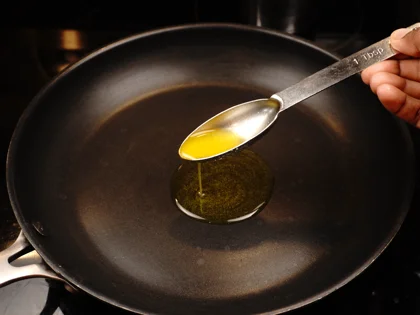
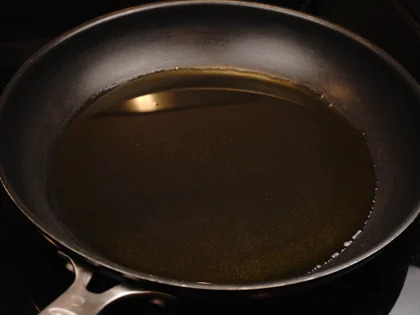
Add 2 tbsp of liquid ghee to a non-stick frying pan and swirl it around to coat the surface evenly. Preheat the pan over a medium flame for about 3 to 4 minutes, until the ghee is hot, but not smoking.
Note on Ghee Amount: The exact amount of ghee you need depends on the size of your pan—aim for a thin, even layer across the bottom.
Why Ghee Beats Butter: Traditional restaurants cook fish skewers in ghee because it infuses a rich flavor and helps create a beautiful crust. Avoid using regular butter; its high water content prevents the fish from browning and causes the fat to burn too quickly.
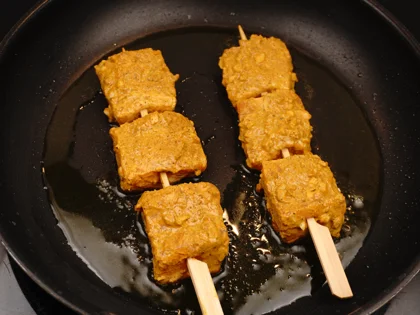
Cooking the Skewers (First Side)
The Sizzle Check: Before adding the chicken, make sure the pan is at the perfect temperature. You should hear a sharp sizzling sound the second the meat hits the ghee. If it doesn't sizzle, the pan is not hot enough. If the ghee is smoking, it's too hot.
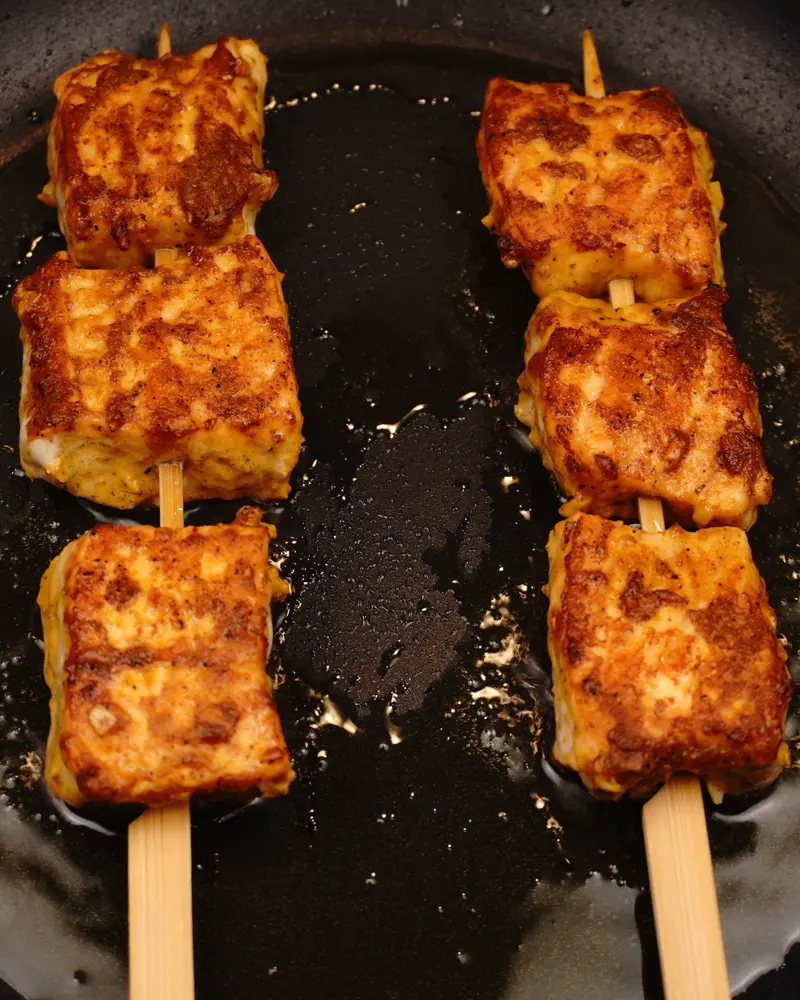
Give Them Space to Brown: Once the pan is ready, place the fish pieces into the hot ghee, leaving plenty of space between each one. Spacing them out ensures they brown well instead of crowding the pan and steaming.
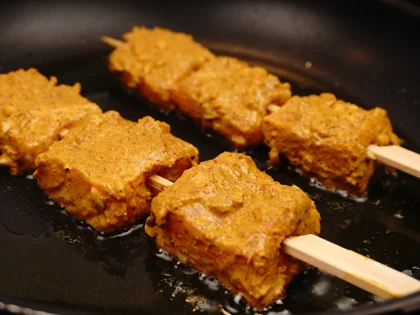
Develop the Crust: Cook undisturbed for about 3 minutes over medium heat. Do not move or turn the pieces.
Check and Flip: After 3 minutes, quickly peek by lifting the sides of the skewers, whether brown/dark brown crust formed. Once formed then flip.
Cooking the Remaining Sides
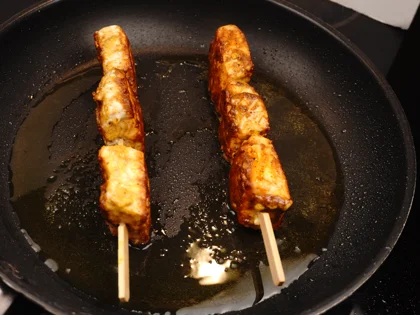
The Thin Sides (30 seconds each): Rotate the skewers to the thin edges and cook each side for about 30 to 45 seconds.
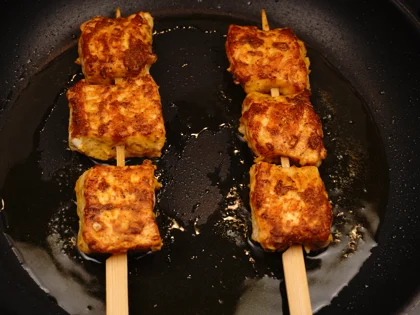
The Second Flat Side (1 to 2 minutes): Flip to the final flat side and continue cooking for 1 to 2 minutes until a brown or dark brown crust forms.
Total Cooking Time: The exact timing depends on the thickness of your fish pieces. If your pieces are a different size, use these general cooking guidelines.
1/2-inch thick pieces: Cook in 5 to 6 minutes total.
1-inch thick pieces: Cook in 10 to 11 minutes total.
Why Cooking Times Vary: Keep in mind that exact times can change depending on your cookware, the heat of your stove, the thickness of the fish pieces.
Check for Doneness : Verify with a Thermometer - For tender, juicy, and flavorful fish pieces every time, insert an instant-read thermometer into the thickest part of the meat. Ensure it reaches an internal temperature at 145°F (63°C). This helps you avoid undercooked or overcooked fish.
Remove Surface Oil and Rest
Drain and pat dry- Transfer the cooked skewers to a paper towel-lined plate. Using a fresh paper towel, gently pat all sides of the skewers to absorb the surface oil.
Transfer and cover- Within a minute, move them to a clean plate and loosely cover them with a lid or foil to rest before serving.
Rest- Allow the kebabs to rest for a minimum of 5 to 10 minutes before serving.
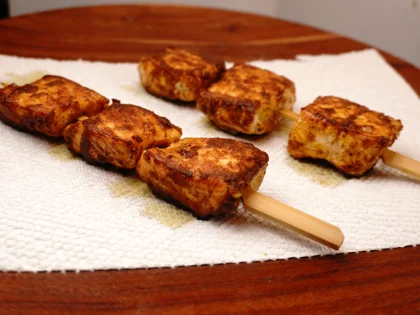
Ready to serve
Ready to Serve: After resting for 5 to 10 minutes, your fish pieces are perfectly juicy and ready to enjoy.
Perfect Pairings :Serve them fresh alongside a refreshing, cool curd mint dip (pudina raita), sliced red onions, and lemon wedges.
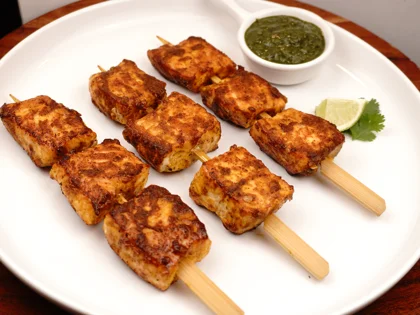
Tips
Prep & Marinade
💡 Pat Dry: Always pat the fish fillet completely dry with a paper towel before cutting and marinating. Removing surface moisture ensures the marinade sticks instead of sliding off.
💡 The Marinade Guide: Always use whole-milk medium hung curd or yogurt, which adds more richness, flavor, and creaminess than low-fat options. Be sure to prepare your hung curd herb mixture into a thick, coarse, and easily spreadable consistency so it clings to the fish perfectly. Plan ahead and let the fish marinate for at least 45minutes to 1 hour to allow the salt to penetrate.
For Cooking
💡 Use Ghee for Flavor & Heat: Traditional restaurants cook tikka in ghee. It infuses a rich, toasted flavor and has a high smoke point that allows the fish to brown beautifully without burning.
💡 Give Them Space: To achieve a dark-brown crust, arrange the fish in a single layer with plenty of space between the pieces. If the pan is crowded, the fish will steam instead of brown. Cook in batches if needed!(To save time and cook more pieces in a pan, switch to a hybrid or seasoned carbon steel pan, which allows you to safely use medium-high heat).
💡 Don't Overcook: Fish cooks fast. For tender, juicy results every time, use an instant-read thermometer and remove the fish from the heat as soon as the thickest part reaches at 145 degree farenheit.
For Salt & Taste-Testing
💡 Be careful with your salt, as it affects both flavor and texture. Too little salt leaves the fish lacking flavor, while too much can make it tough. Remember that not all salts are the same; they have different levels of saltiness depending on the brand and type;for this recipe, I used 1/2 tsp of fine sea salt for 250 g of boneless fish and 1/8 tsp for curd spice mixture.
💡 Never taste the marinade once the raw fish has been added, as this can lead to food poisoning. To check the salt levels safely, fry a small sample piece of the fish and adjust the seasoning based on the cooked taste.
Frequently Asked Questions
You should pat dry fish fillet because it helps the marinade stick to the meat instead of sliding off.
Yes! Marinating with a spiced curd and salt mixture for at least 1 hour is essential. It tenderizes the fish and ensures salt is deeply seasoned and flavor.
First ensure your pan is hot enough to produce a loud sizzle when the meat touches it. Second, avoid overcrowding the pan ( leave more space between the fish skewers); use a large pan or cook in batches so the fish brown instead of steaming in its own juices. Finally, don't move the meat for at least 3–4 minutes to allow the crust to form properly.
Use ghee because it infuses a rich flavor while enhancing the fish taste and texture. Avoid using butter, as it contains water and prevent the fish from browning properly.
Flipping only once on all sides prevents the delicate fish from breaking apart and allows a flavorful, brown crust to form.
Thick skewers can stay raw in the middle. To fix this, cover the pan with a lid halfway through cooking to trap heat. You can also add more oil to the pan for a shallow fry to help them cook more evenly.
You can use these fish skewers in many different meals. Try chopping them up to use in fried rice, soups, or noodles. They also make an excellent filling for sandwiches, burgers, and chapati wraps, or you can use them as a savory stuffing for dosas and tacos.
Using flat wooden skewers is highly recommended because they prevent the fish pieces from rotating or spinning when you try to flip them. This ensures even cooking and a much better presentation.
Reuse the skewers - if wooden skewers are not burnt after cooking, you can wash them thoroughly and use them again. However, always inspect them for cracks or food residue to ensure they remain food-safe.
To ensure your fish skewers stay juicy, avoid overcooking them. The best way for tender, juicy, and flavorful fish skewers every time, use an instant-read thermometer to ensure the thickest part of the fish reaches an internal temperature of 145°F. For pieces that are 1/2-inch thick, this typically takes only 5 to 6 minutes in total.
Just put it in an airtight container and store it in the fridge immediately after cooling (and always within 2 hours of cooking). According to food safety guidelines, cooked fish lasts in the fridge for 3–4 days.
You Might Also Like

Garlic Fish Tikka (Lasooni Fish Tikka) Recipe
In Hindi, "lasooni" translates to garlic, and "tikka" refers to bite-sized pieces of meat or fish. To prepare this dish, small size pieces of fish are marinated in chopped garlic, yogurt and spices, then threaded onto skewers. Traditionally, these are cooked in a large clay oven known as a tandoor. At home, you can prepare them using a charcoal barbecue, an oven broiler or grill/normal pan . These garlic fish tikkas stay juicy and tender on the inside with a dark brown crust on the outside.
Ingredients
- 250 grams Skinless & Boneless fish pieces
- 2 tbsp (30 grams) Hung Curd
- 2 tsp (4 to 5 small size cloves) Finely chopped garlic
- 1 tsp (1/4 medium size) Lime juice
- 1/4 tsp Turmeric powder
- ½ tsp Garam masala powder
- ½ tsp Zeera powder
- 1 tsp Chili powder
- ½ tbsp (4 grams) Corn starch
- approx. 3 tbsp Ghee
- ¾ tsp (approx.) Salt
Instructions
-
Cut into Uniform Cubes
Ensure your fish fillet is completely patted dry, then place it on a clean cutting board. Using a sharp kitchen knife, gently cut the fillet into uniform, 1-inch bite-sized cubes. Keeping the pieces equal in size ensures they all cook at the exact same rate.
-
Hung Curd Consistency
Aim for a medium hung curd consistency. If the curd is too runny, the marinade will be too watery, won't stick to the chicken, and will lack flavor. On the other hand, if the hung curd is too thick and stiff, it won't spread easily, making it difficult to coat the chicken. Preparing a medium hung curd ensures there is just a little liquid left, providing the perfect balance for a smooth, even spread.
-
How to Prep
Prep using either a quick method or the straining method:
Option A: The Quick Method (Ready in Minutes) Best if you are short on time. Requires a damp muslin or cheesecloth.
Pour & Gather: Pour about 50 g yogurt/curd into the center of your damp cloth. Bring the four corners together and lift it up to create a small pouch.
Squeeze Gently: Hold the top of the pouch tightly. Very gently press and squeeze the cloth along with the curd to release the excess liquid until it reaches a medium consistency.
Tip: Keep your touch light! Pressing too hard will force the creamy yogurt solids through the fabric, reducing your yield.
Option B: The Straining Method (Hands-Free) Best if you are planning ahead and want gravity to do the work.
The Setup: Pour about 50 g yogurt/curd directly into a fine-mesh strainer set over a bowl.
The Wait: Place the setup in the refrigerator and let it drain undisturbed for 3 to 4 hours until it reaches a medium, creamy consistency.
-
Measure for Marinade
Open the cloth and measure out 30 g (2 tbsp) of the medium hung curd for your marinade.
Tip: Always choose a whole-milk yogurt or curd. Full-fat options add much more flavor and creaminess to your tikka marinade than low-fat alternatives.
-
Coat the fish pieces and keep aside
Add the following ingredients to the small fish pieces:
1 tsp lime juice
2 tsp garlic, finely chopped
1/2 tsp salt
Even Distribution - Instead of pouring them in one spot with a spoon, sprinkle it evenly over the fish pieces. Apply it to all sides of the pieces to ensure a uniform coating. Set aside.
-
Mix the Marinade
In a mixing bowl, combine
2 tbsp (30 grams) prepared hung curd
1/2 tbsp(4 grams) corn starch
1/2 tsp garam masala powder (Everest brand)
1/2 tsp cumin, ½ tsp turmeric and 1 tsp chili powder (Homemade)
Little salt.
-
Applying the Marinade
Using your hands, gently coat each piece of fish evenly. Repeat this process until every piece is fully and uniformly coated.
Note: Don't worry if the marinade feels a bit too thick in your bowl at first. Once you start applying it, the lime juice and salt from the first marinade will naturally help loosen it slightly on the surface of the fish, making it much easier to spread.
If the consistency is still too thick or too thin, adjust it using these steps:
If still too thick: Stir a teaspoon of yogurt directly into the marinade to loosen it up.
If too watery mistakenly: Mix in 1 to 2 teaspoons of cornstarch to help the marinade cling to the fish.
Place the marinated lasooni fish tikka in the room temperature for at least 45 minutes to 1 hour.
-
Heat the Ghee
I used a ceramic non-stick pan over medium heat for this recipe..
Add 2 tbsp of liquid ghee to a non-stick frying pan and swirl it around to coat the surface evenly. Preheat the pan over a medium flame for about 3 to 4 minutes, until the ghee is hot, but not smoking.
Note on Ghee Amount: The exact amount of ghee you need depends on the size of your pan—aim for a thin, even layer across the bottom.
Why Ghee Beats Butter: Traditional restaurants cook fish skewers in ghee because it infuses a rich flavor and helps create a beautiful crust. Avoid using regular butter; its high water content prevents the fish from browning and causes the fat to burn too quickly.
-
Cooking the Skewers (First Side)
The Sizzle Check: Before adding the chicken, make sure the pan is at the perfect temperature. You should hear a sharp sizzling sound the second the meat hits the ghee. If it doesn't sizzle, the pan is not hot enough. If the ghee is smoking, it's too hot.
Give Them Space to Brown: Once the pan is ready, place the fish pieces into the hot ghee, leaving plenty of space between each one. Spacing them out ensures they brown well instead of crowding the pan and steaming.
Develop the Crust: Cook undisturbed for about 3 minutes over medium heat. Do not move or turn the pieces.
Check and Flip: After 3 minutes, quickly peek by lifting the sides of the skewers, whether brown/dark brown crust formed. Once formed then flip.
-
Cooking the Remaining Sides
The Thin Sides (30 seconds each): Rotate the skewers to the thin edges and cook each side for about 30 to 45 seconds.
The Second Flat Side (1 to 2 minutes): Flip to the final flat side and continue cooking for 1 to 2 minutes until a brown or dark brown crust forms.
Total Cooking Time: The exact timing depends on the thickness of your fish pieces. If your pieces are a different size, use these general cooking guidelines.
1/2-inch thick pieces: Cook in 5 to 6 minutes total.
1-inch thick pieces: Cook in 10 to 11 minutes total.
Why Cooking Times Vary: Keep in mind that exact times can change depending on your cookware, the heat of your stove, the thickness of the fish pieces.
Check for Doneness : Verify with a Thermometer - For tender, juicy, and flavorful fish pieces every time, insert an instant-read thermometer into the thickest part of the meat. Ensure it reaches an internal temperature at 145°F (63°C). This helps you avoid undercooked or overcooked fish.
-
Remove Surface Oil and Rest
Drain and pat dry- Transfer the cooked skewers to a paper towel-lined plate. Using a fresh paper towel, gently pat all sides of the skewers to absorb the surface oil.
Transfer and cover- Within a minute, move them to a clean plate and loosely cover them with a lid or foil to rest before serving.
Rest- Allow the kebabs to rest for a minimum of 5 to 10 minutes before serving.
-
Ready to serve
Ready to Serve: After resting for 5 to 10 minutes, your fish pieces are perfectly juicy and ready to enjoy.
Perfect Pairings :Serve them fresh alongside a refreshing, cool curd mint dip (pudina raita), sliced red onions, and lemon wedges.
Loading rating...
Write a Review
Loading reviews...