Baking Date / Date Spread
by Viruthiga Veni
Loading rating...
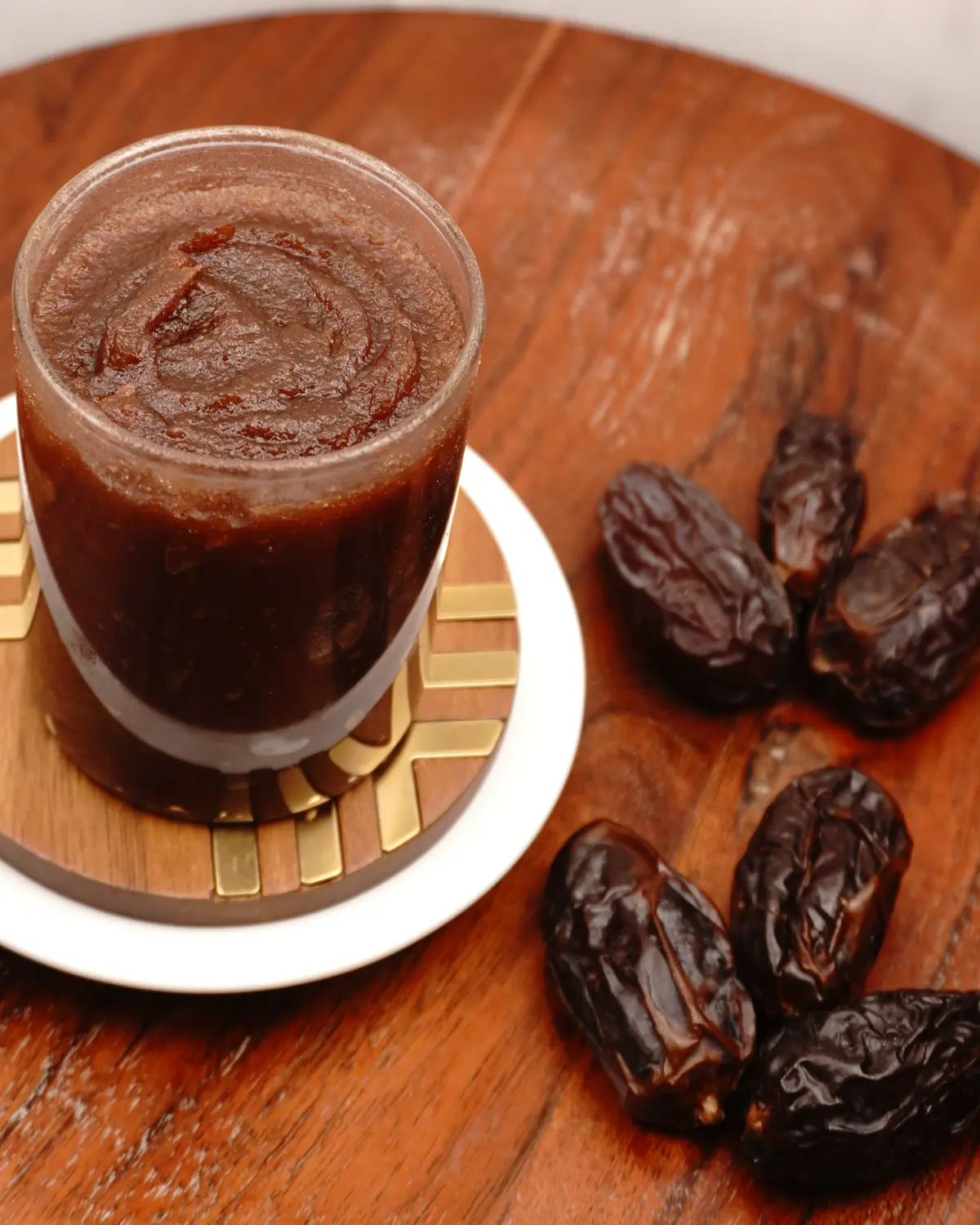
Baking date is easy to make with only 2 ingredients. They are nutrient-dense, versatile staples used as all-natural sweeteners across a wide range of sweet and savory dishes. They are one of the healthiest replacements for refined white sugar due to their high nutritional value.
Ingredients
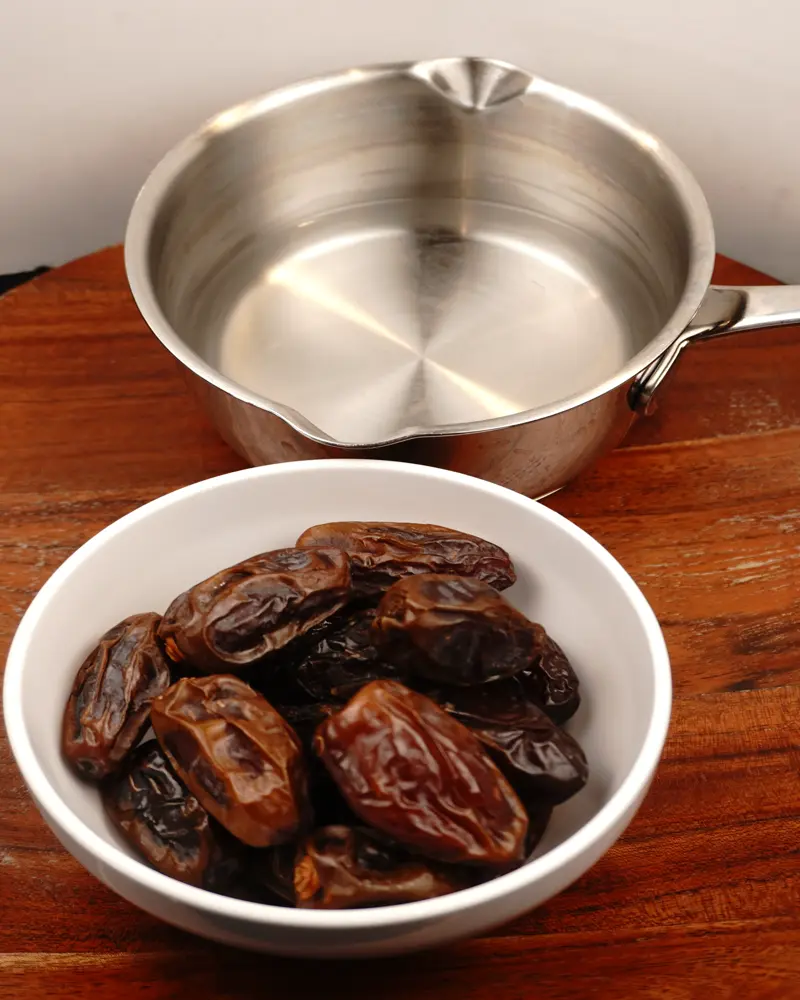
Dates – 300 g
Water – 250 ml approx.
Making of date paste
To prepare the date paste, pit and wash the dates, soak them in hot water to soften, remove the skins, and blend into a fine paste.
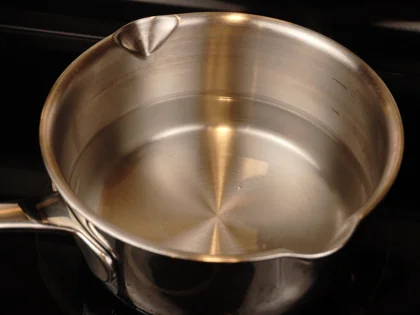
Heat water in a pan
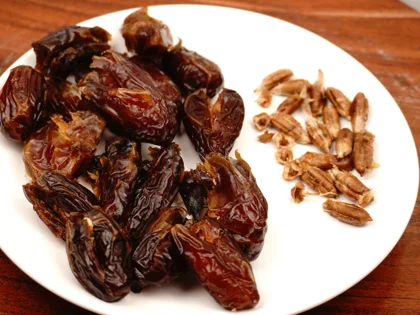
Bring water to a simmer in a pan for 5 minutes. Meanwhile, remove the pits and caps and rinse the dates.
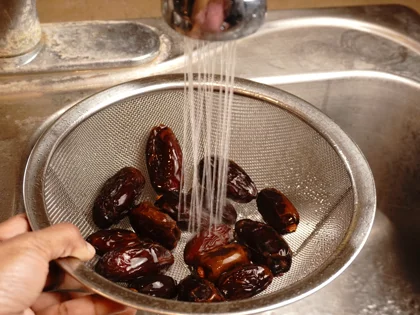
Pitting, Selecting Dates and Rinsing
Remove the top cap and the pit, open each date to inspect the interior for any signs of black spots or mold, discarding any that do not look perfectly fresh. Place the dates in a colander and rinse them under cold running water for a few seconds, gently rubbing the skin to remove any surface debris.
Soak to Soften
Place the pitted dates in a bowl and cover them with hot water. Let them soak for at least 1 hour.
Note: If your dates are particularly dry or firm, soak them for an additional few hours until they are soft and easily mashed.
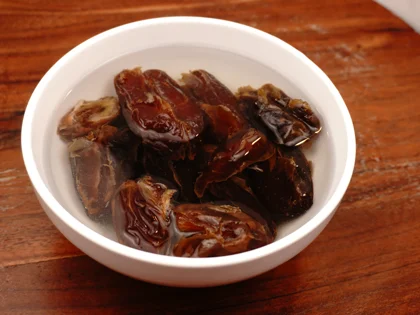
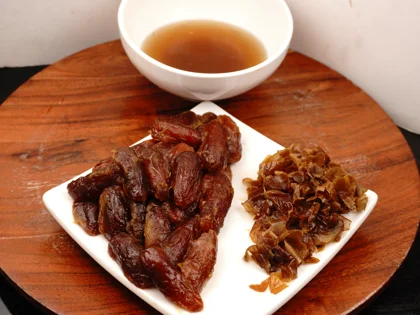
Remove the skin
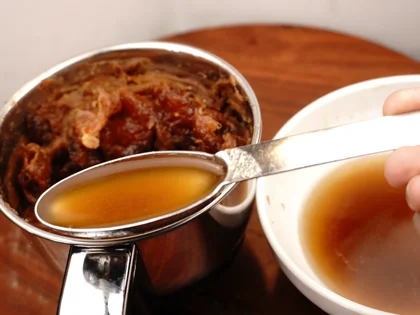
Gently slip the skins off each soaked date and set them aside. Repeat until all dates are peeled. Reserve the soaking liquid; it will be used to help blend the dates into a smooth paste.
Note: Check the skins - Remove the skins if they are thick (like Medjool) for a smoother cake texture and to avoid dense spots. If the date skins are thin and stick to the fruit, there is no need to remove them.
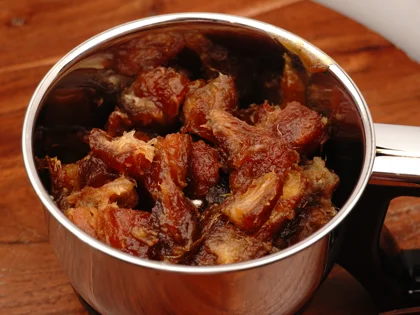
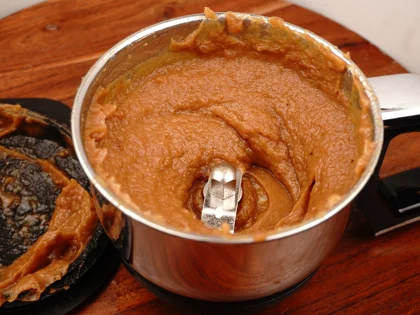
Blend in to paste
Add a small amount of soaking liquid to the blender and process using short pulses. Gradually incorporate more liquid as needed, blending until the mixture reaches a smooth consistency.
Making of baking date / date spread
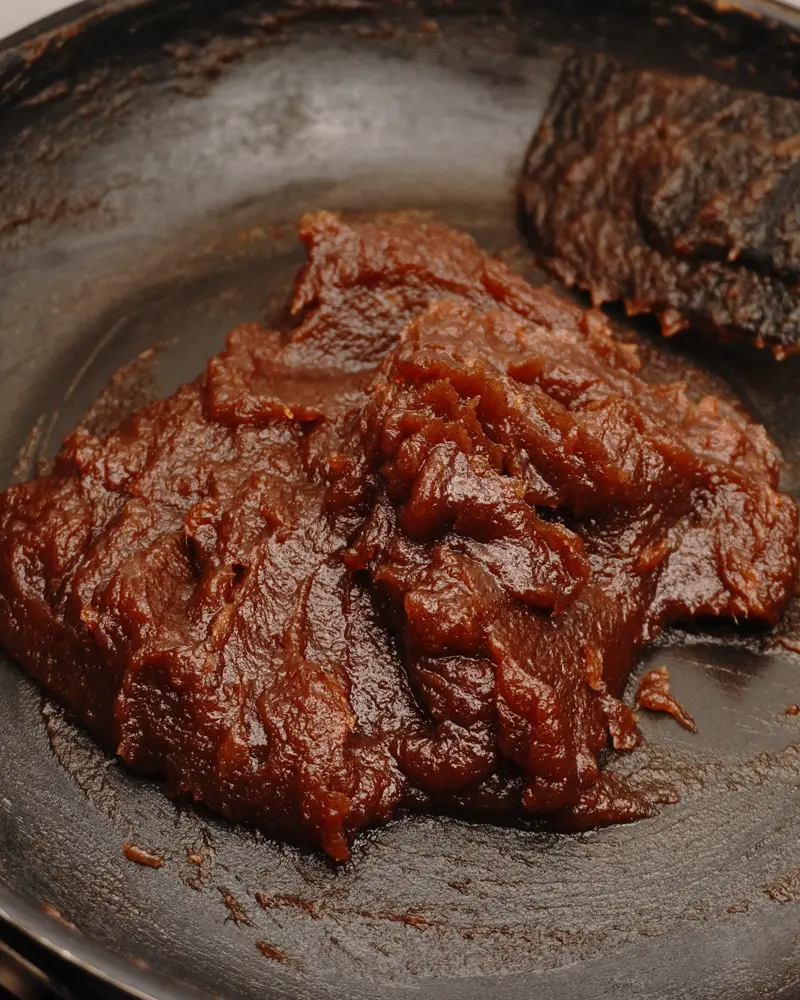
Sauté the date paste in a pan over medium-low heat to remove excess moisture. Stir constantly until it thickens into a dense, jam-like consistency suitable for baking.
Heat the paste and stir constantly
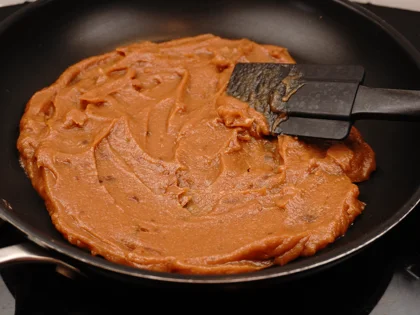
Place your blended date paste into a wide, heavy-bottomed non-stick pan over medium heat. Use a silicone spatula to continuously move the paste around the pan; Dates have very high natural sugar content and will burn quickly if left still.
Target Consistency and transfer immediately
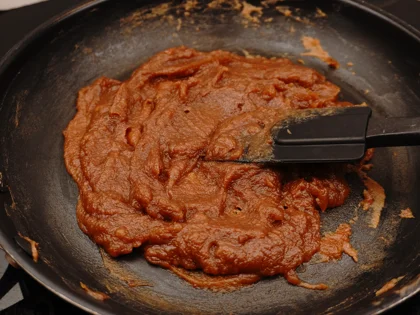
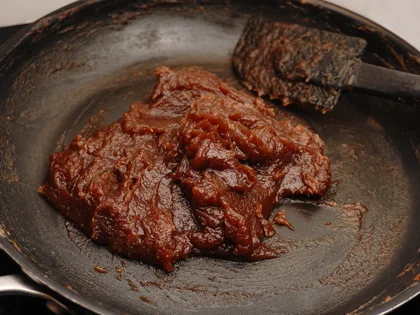
Continue heating until the paste thickens and darkens slightly. It is ready when it pulls away from the pan and holds its shape, while remaining smooth and spreadable.
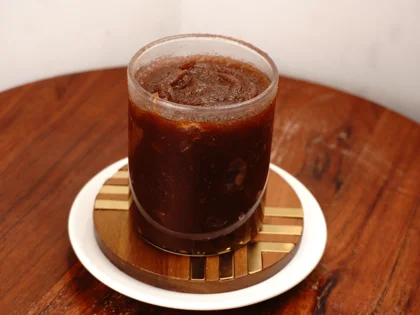
Once the lightly thick consistency is achieved, remove the pan from the heat and transfer them to a cool container/jar immediately. Leaving them in the hot pan—even with the heat off—can cause them to continue cooking and become thick. It will continue to firm up slightly as it cools.
Storage
Refrigeration
Date Paste should be used within 2 weeks due to its higher water content, whereas Baking Date spread can last up to 1 month due to the heat reduction process.
Choosing the Right Option for Your Recipe
Depending on the specific requirements of your recipe, you can utilize either date paste or baking date (date spread) as a nutrient-dense alternative to refined sugars.
Date Paste (high moisture)
This version has a higher water content and a smoother, more fluid texture. It is the ideal choice for smoothies, milkshakes, oat meal, chia pudding, dressings, or breakfast bowls, as it blends easily into liquids and soft foods.
Baking Date / date Spread (low moisture)
This version has been reduced (usually over medium heat) to remove excess moisture. Best for cookies, tart fillings, cakes or breads where you need a stiffer consistency. This ensures the natural fruit sugars provide sweetness and binding power without introducing unnecessary water that could make the dough soggy or prevent it from rising.
Frequently Asked Questions
Whether it is need to remove the skin for dates before grinding to make paste/spread?
When making date paste or spread, you need to decide if you should remove the skins first. This depends on the type of date you are using and the recipe you are making.
Thin-Skinned Dates (e.g., Deglet Noor) For these dates, you do not need to remove the skin because:
Characteristics : These dates have smooth, firm skin that sticks tightly to the fruit. This makes the skin very hard to pull off.
Preparation : Even after soaking them in water, the skin does not "slip" off easily. Because of this, most people just leave the skin on.
Baking Performance : The skins are very thin and soft. When you blend or mix them, they break down completely. They will not affect the texture of your cookies, muffins, or cakes, so every bite stays smooth and tasty.
Thick-Skinned Dates (e.g., Medjool) For dates with thick skins, it is often better to remove the skin before baking because:
Characteristics : Medjool dates are large and sweet, but they have thick, wrinkled skins that feel like loose paper.
The "Slip" Method : If you soak them in hot water for a few minutes, the skin becomes loose. You can then easily "slip" or peel the skin off with your fingers.
Texture Issues : These thick skins do not melt away or break down easily when mixed. If you leave them on, they can cause problems: Uneven Texture : The thick skin does not blend well, which can create "dense" or heavy spots in your recipe. These bits of tough skin make the food feel less soft and cause a bumpy, inconsistent texture in delicate items like fine-crumb cakes or smooth puddings.
Tips
💡 If the paste accidentally becomes too thick, you can stir in 1 teaspoon of hot water at a time to restore its spreadable texture.
💡 The remaining soaking liquid is infused with date sugar. You can use it as a natural sweetener for coffee, smoothies, milkshake and cereal bowls.
You Might Also Like
Baking Date / Date Spread Recipe
Baking date is easy to make with only 2 ingredients. They are nutrient-dense, versatile staples used as all-natural sweeteners across a wide range of sweet and savory dishes. They are one of the healthiest replacements for refined white sugar due to their high nutritional value.
Ingredients
- 300 g Dates
- 250 ml approx. Water
Instructions
-
Heat water in a pan
Bring water to a simmer in a pan for 5 minutes. Meanwhile, remove the pits and caps and rinse the dates.
-
Pitting, Selecting Dates and Rinsing
Remove the top cap and the pit, open each date to inspect the interior for any signs of black spots or mold, discarding any that do not look perfectly fresh. Place the dates in a colander and rinse them under cold running water for a few seconds, gently rubbing the skin to remove any surface debris.
-
Soak to Soften
Place the pitted dates in a bowl and cover them with hot water. Let them soak for at least 1 hour.
Note: If your dates are particularly dry or firm, soak them for an additional few hours until they are soft and easily mashed.
-
Remove the skin
Gently slip the skins off each soaked date and set them aside. Repeat until all dates are peeled. Reserve the soaking liquid; it will be used to help blend the dates into a smooth paste.
Note: Check the skins - Remove the skins if they are thick (like Medjool) for a smoother cake texture and to avoid dense spots. If the date skins are thin and stick to the fruit, there is no need to remove them.
-
Blend in to paste
Add a small amount of soaking liquid to the blender and process using short pulses. Gradually incorporate more liquid as needed, blending until the mixture reaches a smooth consistency.
-
Heat the paste and stir constantly
Place your blended date paste into a wide, heavy-bottomed non-stick pan over medium heat. Use a silicone spatula to continuously move the paste around the pan; Dates have very high natural sugar content and will burn quickly if left still.
-
Target Consistency and transfer immediately
Continue heating until the paste thickens and darkens slightly. It is ready when it pulls away from the pan and holds its shape, while remaining smooth and spreadable.
Once the lightly thick consistency is achieved, remove the pan from the heat and transfer them to a cool container/jar immediately. Leaving them in the hot pan—even with the heat off—can cause them to continue cooking and become thick. It will continue to firm up slightly as it cools.
-
Refrigeration
Date Paste should be used within 2 weeks due to its higher water content, whereas Baking Date spread can last up to 1 month due to the heat reduction process.
-
Date Paste (high moisture)
This version has a higher water content and a smoother, more fluid texture. It is the ideal choice for smoothies, milkshakes, oat meal, chia pudding, dressings, or breakfast bowls, as it blends easily into liquids and soft foods.
-
Baking Date / date Spread (low moisture)
This version has been reduced (usually over medium heat) to remove excess moisture. Best for cookies, tart fillings, cakes or breads where you need a stiffer consistency. This ensures the natural fruit sugars provide sweetness and binding power without introducing unnecessary water that could make the dough soggy or prevent it from rising.
-
Whether it is need to remove the skin for dates before grinding to make paste/spread?
When making date paste or spread, you need to decide if you should remove the skins first. This depends on the type of date you are using and the recipe you are making.
Thin-Skinned Dates (e.g., Deglet Noor) For these dates, you do not need to remove the skin because:
Characteristics : These dates have smooth, firm skin that sticks tightly to the fruit. This makes the skin very hard to pull off.
Preparation : Even after soaking them in water, the skin does not "slip" off easily. Because of this, most people just leave the skin on.
Baking Performance : The skins are very thin and soft. When you blend or mix them, they break down completely. They will not affect the texture of your cookies, muffins, or cakes, so every bite stays smooth and tasty.
Thick-Skinned Dates (e.g., Medjool) For dates with thick skins, it is often better to remove the skin before baking because:
Characteristics : Medjool dates are large and sweet, but they have thick, wrinkled skins that feel like loose paper.
The "Slip" Method : If you soak them in hot water for a few minutes, the skin becomes loose. You can then easily "slip" or peel the skin off with your fingers.
Texture Issues : These thick skins do not melt away or break down easily when mixed. If you leave them on, they can cause problems: Uneven Texture : The thick skin does not blend well, which can create "dense" or heavy spots in your recipe. These bits of tough skin make the food feel less soft and cause a bumpy, inconsistent texture in delicate items like fine-crumb cakes or smooth puddings.
Loading rating...
Write a Review
Loading reviews...