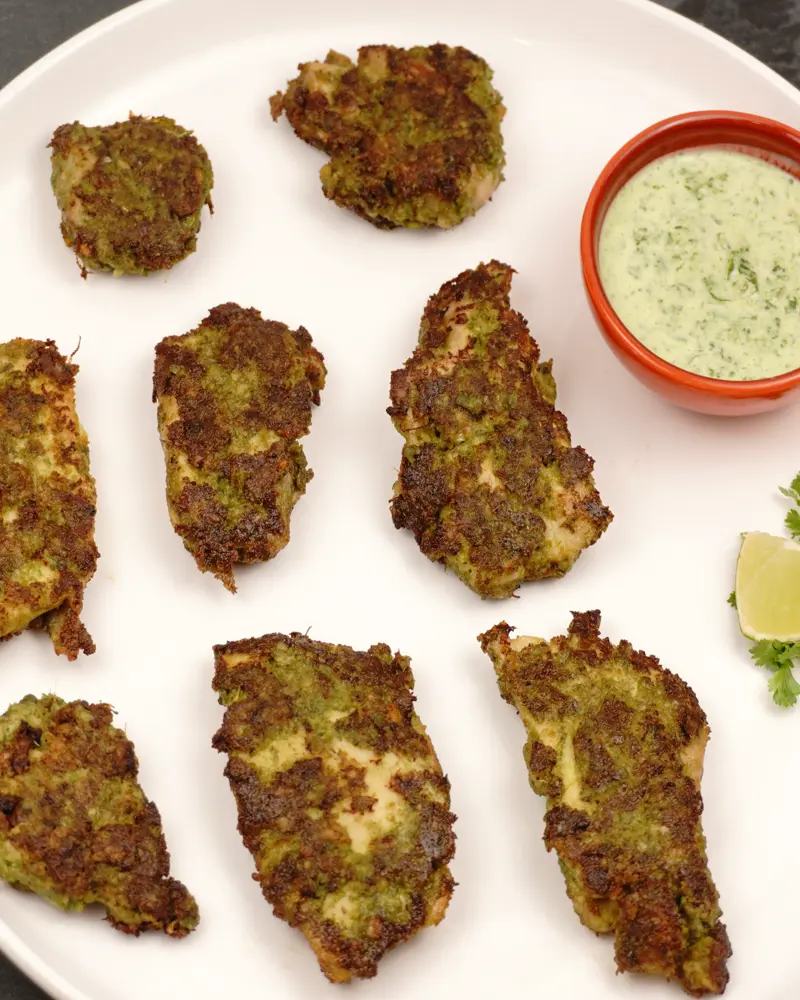
Hariyali Murgh Tikka
by Viruthiga Veni
Loading rating...
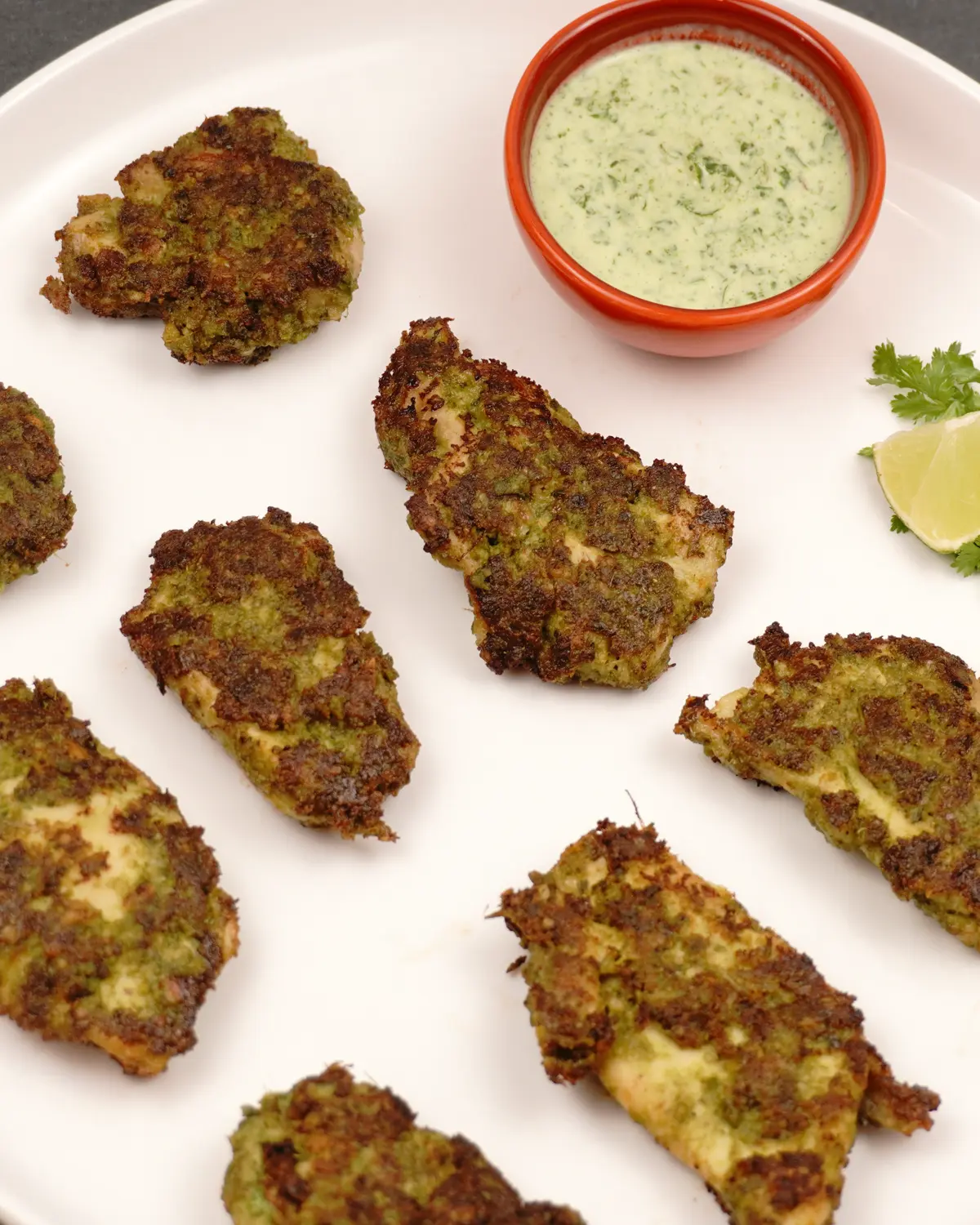
Hariyali Murgh Tikka translates to green chicken pieces, derived from hariyali (green), murgh(chicken), and tikka(small chunks). This dish features bite-sized chicken marinated in a vibrant blend of fresh green herbs and fragrant spices.
Then the marinated hariyali murgh tikka are inserted through the skewers and cooked in a large clay oven known as a tandoor. But in home we can cook over charcoal fire in barbeque, under the oven broiler and grill /normal pan.
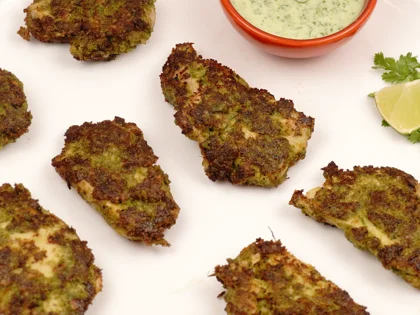
In this recipe, a frying pan is used to get the outside surface of the chicken pieces to attain a brown color. These pan fried chicken tikka are tender, juicy inside with a brown flavorful crust outside.
For a different flavor, try the Afghani Murgh Tikka.
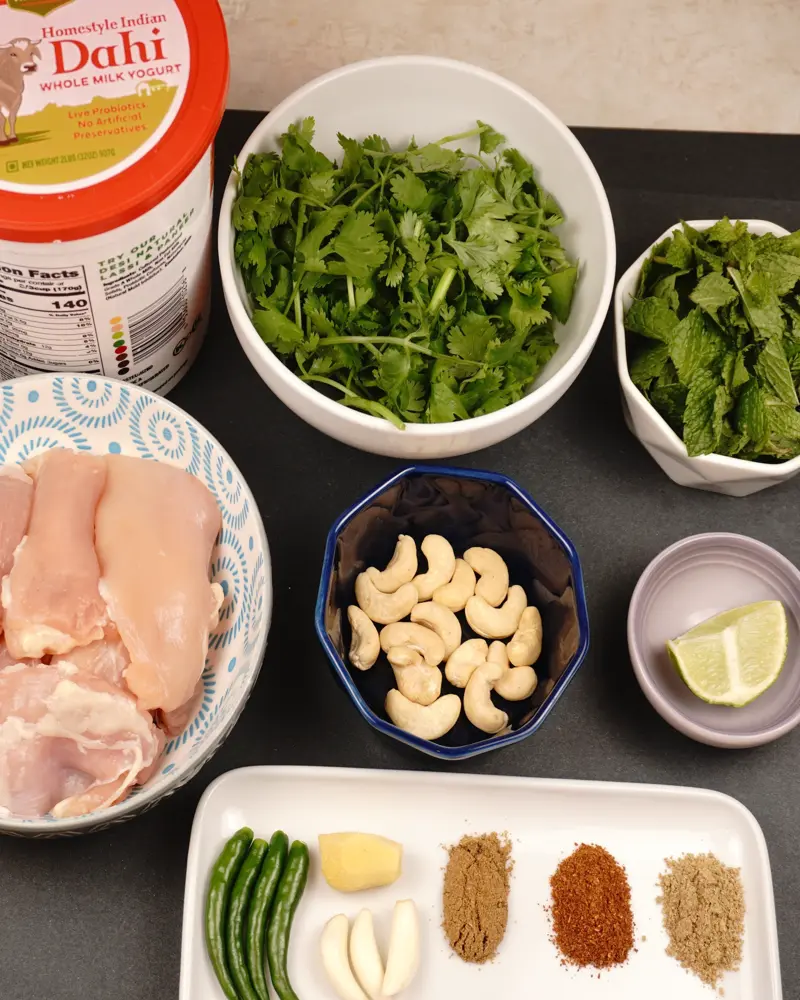
Ingredients
Boneless skinless chicken thigh pieces – 250 gm
Coriander leaves – 20 grams (approx. 1 cup)
Mint leaves – 10 grams (approx. ½ cup)
Whole Milk Hung curd – 4 tbsp (60 g)
Garlic – 2 to 3 cloves
Green chilies – 3 to 4
Raw cashews – 20 gm (15 pieces small size)
Zeera powder – ½ tsp
Fennel powder – ½ tsp
Garam masala powder – ½ tsp
Lime juice – 1 tsp (1/4 medium size)
Ghee – 4 tbsp
Salt – ¾ tsp approx.
Prepare the Chicken Pieces
Choose a Cleaning Method
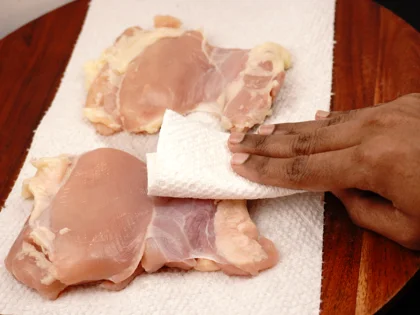
Dry Wipe (Recommended): Skip rinsing the chicken pieces entirely. Simply wipe the 250g chicken thigh clean with a dry paper towel and dispose of the towel in the trash immediately. This is the safest way to prevent the spread of kitchen bacteria.
Rinse & Dry (Alternative): If you prefer to rinse the chicken, do so quickly under a very gentle, low-pressure stream of cold running water to avoid splashing. Also, keep the chicken piece deep down inside the sink basin. Transfer the chicken directly to a clean plate lined with paper towels, pat dry, and discard the paper towels right away.
Butterfly and pound
To ensure even cooking, bring the chicken piece to a uniform 1/4 inch thickness before slicing.
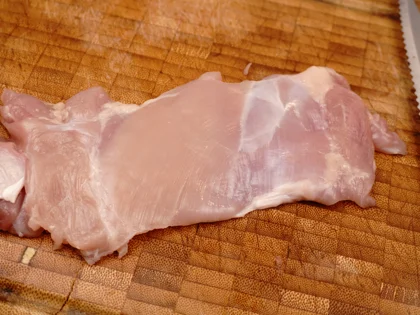
Butterfly: If one side of the thigh is thicker, slice horizontally through the thick part so the entire piece is even.
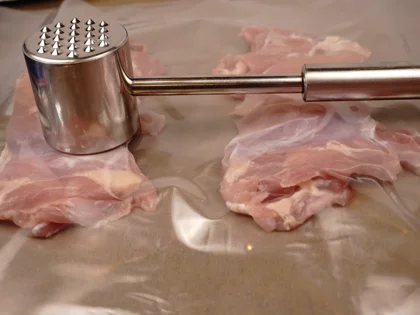
Pound: Cover the chicken pieces with plastic wrap. Using a meat mallet or a heavy, flat pan, lightly pound the meat.
Note: Do not skip pounding. This loosens tough fibers, ensuring the chicken stays tender.
Slice into Small Pieces
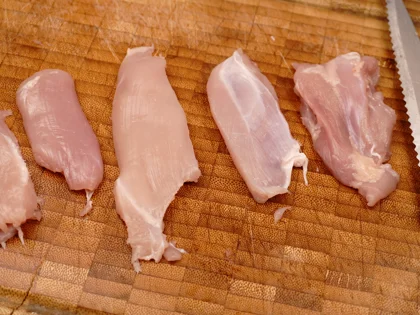
Using a sharp knife, cut the prepared chicken thighs into small pieces. Aim for a uniform ¼-inch thickness so every piece cooks at the same time.
Prep Hung Yogurt/Curd
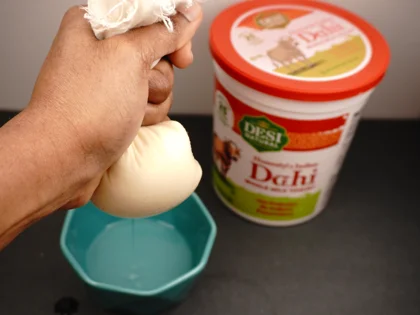
Pour & Gather: Pour approximately 100 grams of plain full-fat yogurt/curd right into the center of the damp muslin cloth. Bring the four corners of the cloth together and lift it up, creating a small pouch.
Gentle Squeeze: Hold the top of the pouch tightly with one hand. Using your other hand, gently twist and apply light, steady pressure to squeeze out the excess liquid.
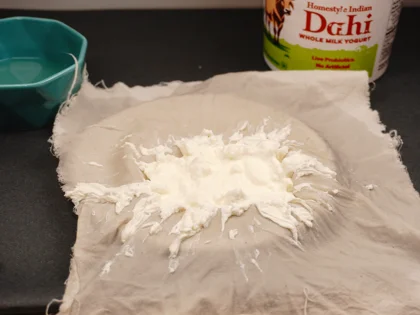
Measure for Marinade: Open the cloth and measure out 60 grams (4 tablespoons) of the thick hung curd.
Prepare First Marinade, Coat Chicken & Chill
Initial marinade
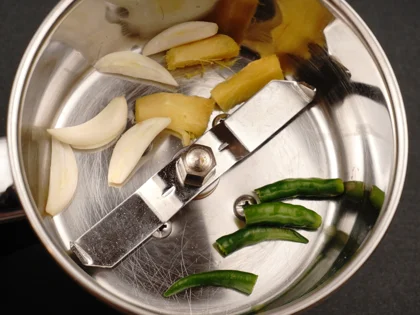
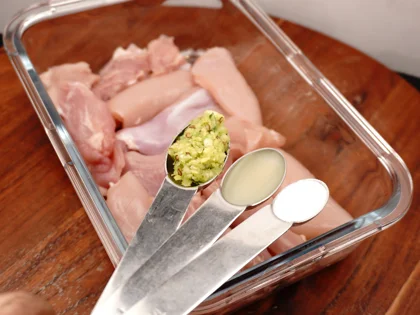
Prep the Aromatics : Wash and dry the ginger and green chilies. Peel the ginger, skin the garlic cloves, and remove the stems from the chilies.
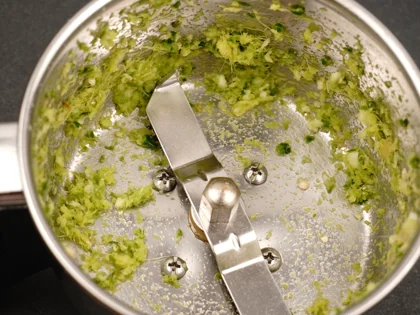
Blend to a Coarse Texture: Put your 1/2 inch ginger, 2 to 3 cloves garlic, and 1 to 2 green chilies in the jar and blend them into a coarse texture.
Note: If the pieces are too big, just chop them down a bit first so the standard blender can handle them easily.
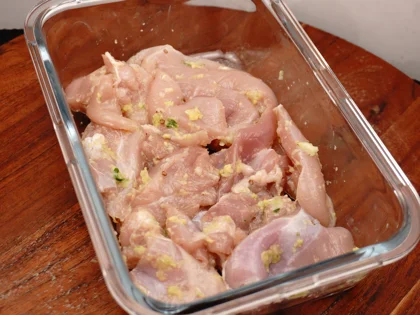
Coat the following ingredients and chill
Add the following to your prepared chicken pieces
Prepared paste
½ tsp salt
1 tsp lime juice
Even Distribution - Instead of pouring them in one spot with a spoon, sprinkle it evenly over the chicken pieces. Apply it to all sides of the pieces to ensure a uniform coating.
Rest : Cover the bowl and let the chicken marinate in the refrigerator for at least one hour. If you’re short on time, simply let the chicken marinate for as long as it takes you to prepare the herb based second marinade.
Prepare the Fresh Herbs
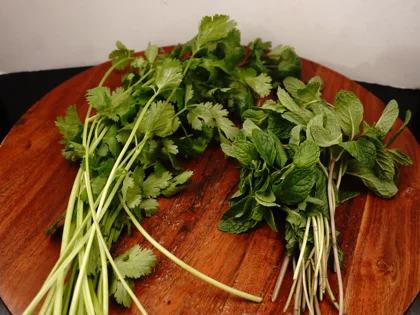
To ensure the best flavor and safety, use good quality leaves. Throw away any brown or damaged leaves. Fresh leaves taste great, but bad leaves will affect the final flavor.
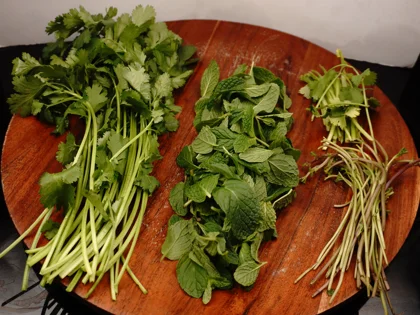
Choose good quality leaves and separate leaves
Pick : Color of the leaves should be Deep or bright green and have a fresh, earthy smell. Check that they are firm and stand upright.
Avoid : Discard any leaves that are discolored (uneven color or yellow), wilted, damaged by insects, mushy spots and bad smell.
Preparation of coriander : Remove the thick stem ends with roots of coriander.
Preparation of mint leaves : It is important to separate the mint from their stems. This is because all stems, even those that are young and tender, can introduce a bitterness and unpleasant flavor.
Clean the leaves & Drain
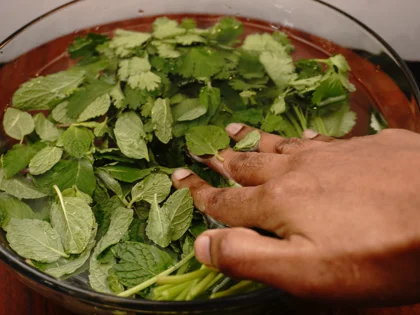
Wash method : To clean the leaves, first fill a large, clean bowl with enough water. place the leaves inside the bowl. Using your hands, swish the leaves gently in the water to remove dirt and sand. Lift the leaves from the water and place them in a colander to drain. Discard the dirty water, refill the bowl, and repeat the process until the water runs clear.
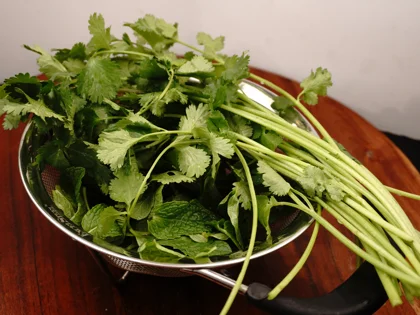
Rest and Shake : Allow the leaves to rest in the colander for a few minutes to let the excess moisture drain away naturally. Alternatively, you can give the colander a few gentle shakes, or simply lift the leaves in your hand and give them a quick shake to remove the excess water.
Roughly chop leaves
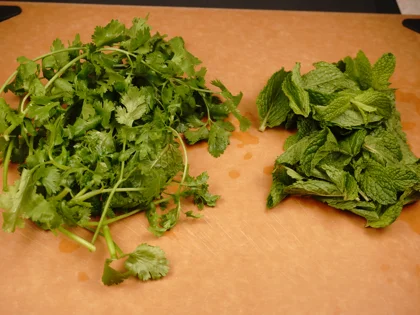
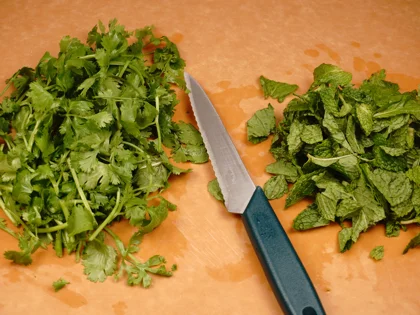
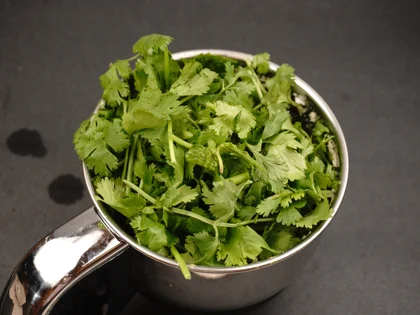
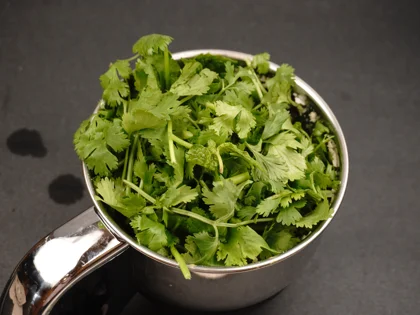
Place your drained leaves onto a cutting board. Roughly chop the leaves into small pieces so your standard blender can easily handle and process them.
Prepare Second Marinade, Coat Chicken & Chill
Soak the Cashews
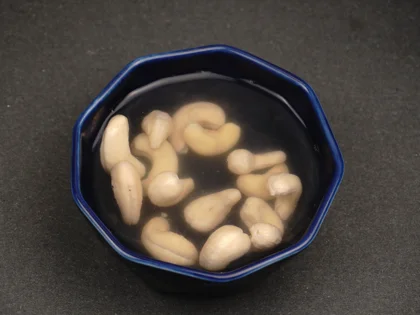
Soak: Place 20 grams (about 15 small pieces) of raw cashews in a small bowl. Pour in enough hot water to submerge them and let them sit for 15 minutes.
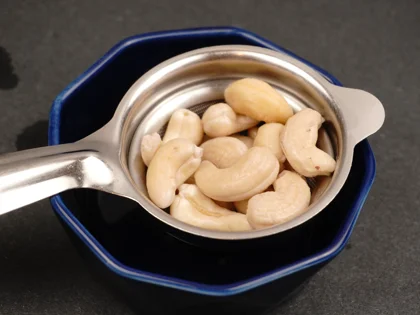
Drain & Rinse: Drain the hot water and give the soaked cashews a quick rinse with cold water.
Blend the Paste
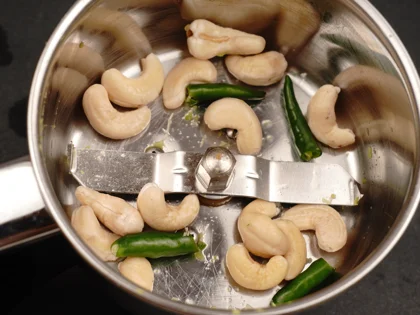
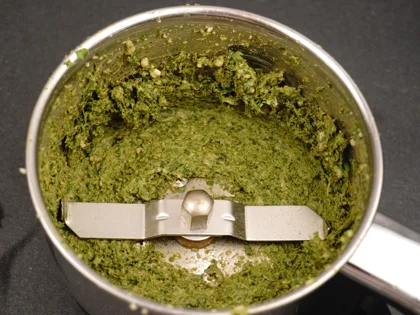
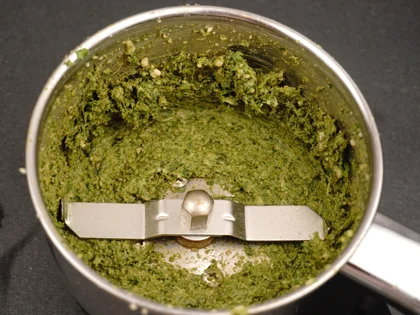
Cashew & Chili Paste: Place the soaked cashews and 1 to 2 green chilies into the blender jar. Pulse a few times in short bursts until they form a coarse paste.
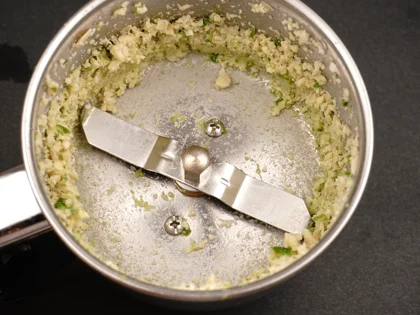
Add the Herbs: Add 10 grams of prep-chopped pudina (mint) leaves and 20 grams of prep-chopped coriander (cilantro) leaves directly into the same jar. Pulse again until the herbs are broken down into a coarse texture with the cashews.
Note: Do not add extra water! The surface moisture in the washed leaves and soaked cashews is enough to help the blender form a perfect coarse thick paste.
Coat prepared fresh herb marinade and chill
Add the herb marinade over the first marinade chicken. Mix thoroughly to ensure every single piece is evenly coated in the vibrant green paste.
Rest : Cover the bowl and let the chicken marinate in the refrigerator for at least 2 hours.
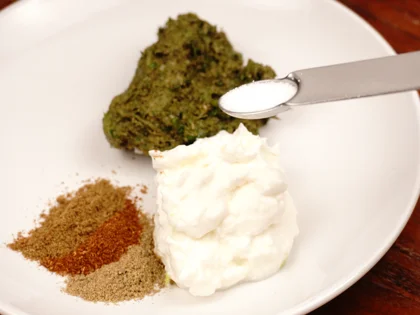
Mix the Marinade
In a mixing bowl, combine
60 grams (4 tbsp) of prepared hung curd,
Coarse cashew-herb paste,
1/2 tsp garam masala (Everest brand)
1/2 tsp cumin and 1/2 tsp fennel powder (Homemade)
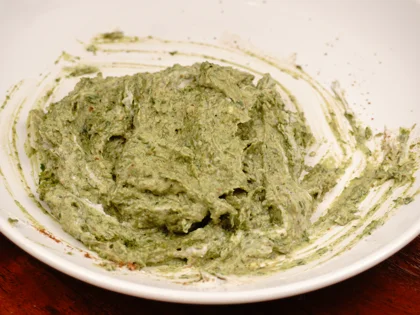
Gently stir the mixture together until combined.
Coat the Chicken
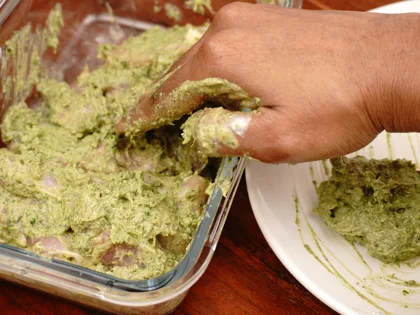
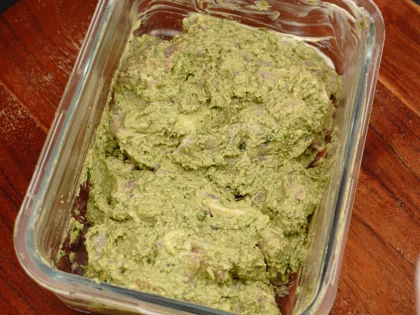
Apply: Using your hands, coat each piece of marinated chicken evenly with the herb marinade on both sides. Repeat this process for all remaining pieces until everything is well-coated.
How Long to Marinate the Hariyali Tikka
Minimum Time : 1 to 2 hours. This provides the balance between flavor infusion and maintaining the firm texture of the chicken.
Maximum Time : Do not exceed 4 hours. For thin cuts in acid marinade (like lime juice), marinating longer than 4 hours can cause the proteins to break down too much, leading to a mushy texture.
Reduce Chill
Prep Before Cooking : Take the marinated afghani chicken out of the fridge and let it sit at room temperature for about 20 to 30 minutes before cooking. Reducing the chill ensures the chicken cooks evenly from the edges to the center.
NOTE: If using an airtight container, ensure the lid is dry by wiping away any water droplets; this prevents moisture from dripping onto the marinated chicken.
Pan Selection and Cooking Spacing Guide
Why Use Non-Stick: It allows you to cook the chicken with less oil, prevents the meat from sticking, and makes cleanup much easier.
Option 1: High-Quality Ceramic Non-Stick (Medium Heat): A premium ceramic coating safely works at medium heat. Leave plenty of space between the chicken pieces so moisture can escape, helping you attain a brown color.
Option 2: Hybrid or Seasoned Carbon Steel (Medium-High Heat): If using these durable pans, you can safely use medium high heat and leave a little space between the pieces while still achieving a brown color.
Pro Tip for Maximum Crunch: For the crispiest crust, use a heavy cast iron skillet on medium-high heat.
Cooking of Chicken Thigh Pieces in Nonstick Pan
Heat a thin layer of ghee in the nonstick fry pan
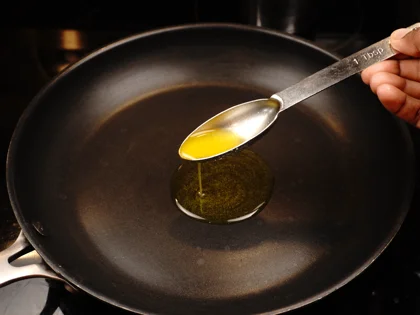
Ghee the pan - Add 2 tbsp liquid ghee to the pan. Swirl the pan evenly to spread ghee to the entire surface of the pan. The usage of tbsp of ghee depends upon the size of your pan.
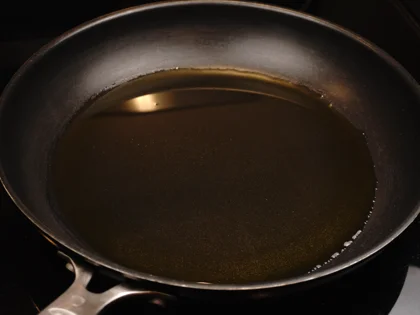
Preheat- Preheat the pan for about 5 to 7 minutes over medium flame.
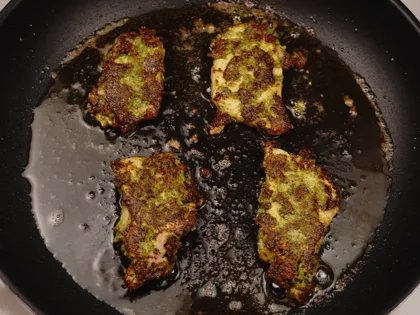
Cook the chicken pieces first side untill form brown crust over medium flame
Note: I used a ceramic non-stick pan at medium heat for this recipe.
Check the Heat- The pan is ready when it is hot. You should hear a sizzling sound the moment the chicken touches the surface. If you don't hear that sizzle, the pan isn’t ready.
Note: The pan should be hot enough to sizzle, but not smoking (too high) or failing to sizzle immediately (too low).
Before and After : Applying more herb marinade before placing the chicken on the pan and also while the chicken is in the pan creates a thicker, more "infused" coating.
Place and Cook- Place the chicken pieces on the pan with more space between them. Cook over medium heat without moving them for 4 to 5 minutes.
Check and Flip- After 4 minutes, quickly peek by lifting the sides of the pieces, whether brown crust formed. Once formed then flip.
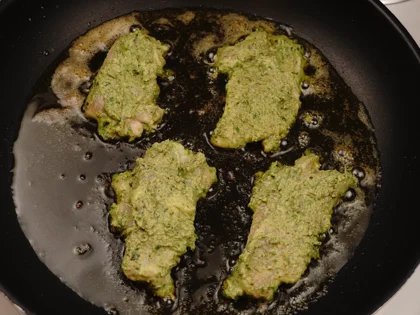
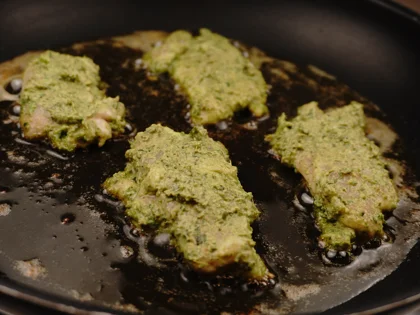
Cook the chicken pieces second side untill form brown crust and finish cooking
Second side- Continue cooking the pieces for about 2 to 3 minutes. My chicken pieces are pounded and thin—just ¼-inch—so I cooked them on medium heat from start to finish. If yours are ½-inch thick, you will need to reduce the heat to medium-low after flipping the chicken pieces to ensure the inside cooks through.
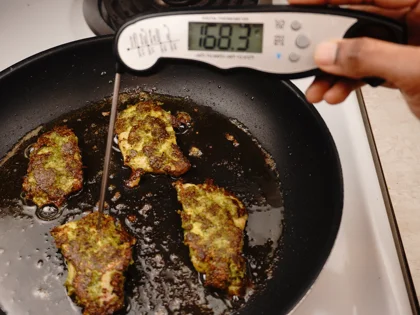
Check Doneness - Confirm the chicken pieces are fully cooked by using a food thermometer to ensure the center reaches an internal temperature of 165-180F.
Total time- Total cooking time is usually 6–7 minutes per batch.
Note: The cooking time will vary depending upon the thickness of the chicken pieces, the type of cookware used, and the amount of heat used. If you do not pound the chicken pieces, they will require slightly more time to cook.
Post-Cooking Steps before serving
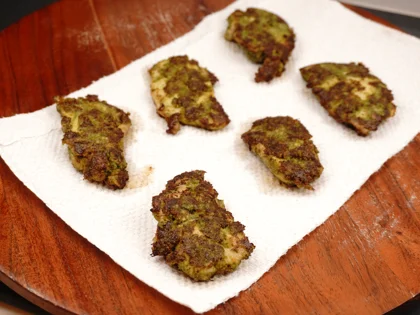
Drain and pat dry- Transfer the cooked pieces to a paper towel-lined plate. Using a fresh paper towel, gently pat all sides of the spieces to absorb the surface oil.
Transfer and cover- After a minute or two, move them to a clean plate and loosely cover them with a lid or foil to rest before serving.
Rest- Allow the kebabs to rest for a minimum of 5 to 10 minutes before serving.
Ready to serve
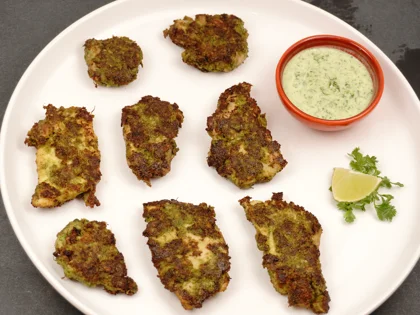
Serve : After the resting period is complete, the skewers are ready to be served alongside a cooling curd dip.
Tips
For prep chicken
💡 For more flavor and a juicier texture, use boneless, skinless chicken leg meat (thighs or drumsticks).
💡 Clean them by either wiping with a paper towel or giving them a quick rinse under running water.
💡 Pat it Dry: Make sure to pat the chicken thighs dry with a paper towel to remove surface moisture before you begin to chop.
💡 For extra tender and soft chicken - Lightly pound the chicken thighs with a heavy object (like a rolling pin or a small skillet) before marinating.Do not skip this step!
💡 Use a sharp knife, cut the chicken thighs into small pieces with same thickness. Aim for a uniform ¼-inch thickness so every piece cooks at the same time.
For marination
💡 If your curd/yogurt is too runny, you can thicken it by placing it in a strainer for about 1 hour to drain the excess liquid. If it is already thick or using greek yogurt, you can use it directly!
💡 For extra flavor, you can add 8 to 10 cashews(soaked) along with the herbs when grinding for marination.
💡 Planning ahead to marinate for 3–4 hours is essential. It tenderizes the chicken and ensures it is deeply seasoned and full of flavor.
For pan frying
💡 I Used a high quality ceramic non-stick pan to cook the chicken pieces so they do not stick and to make cleaning up much easier.
💡 Usually in restaurants chicken pieces are cooked in ghee which will infuses a rich flavor, enhancing the chicken tikka taste and texture.
💡 To get a nice brown crust, ensure the pan is hot enough to sizzle when placing the chicken pieces, but not smoking (too high) or failing to sizzle immediately (too low).
💡 To Attain a Brown Color: Arrange the chicken pieces in a single layer, leaving plenty of space between them. If you are using a smaller pan, cook in multiple batches or switch to a larger pan
💡 For tender, juicy, and flavorful chicken pieces every time, use an instant-read thermometer to ensure the thickest part of the chicken reaches an internal temperature between 165–180°F.
For Salt
💡 Be careful with your salt, as it affects both flavor and texture. Too little salt leaves the chicken lacking flavor, while too much can make it tough. Remember that not all salts are the same; they have different levels of saltiness depending on the brand and type;for this recipe, I used 1/2 tsp of fine sea salt for 250g of boneless chicken and 1/4 tsp for the herb mixture.
Safe Taste-Testing
💡 Never taste the marinade once the raw chicken pieces is added, as this can lead to food poisoning. To check the salt safely, fry a small sample piece and adjust the seasoning based on the cooked taste.
Frequently Asked Questions
Most health organizations recommend that you don't wash chicken at all, as cooking it to an internal temperature of 165°F (74°C) is the only way to kill bacteria.
If you still choose to wash it, do so quickly under a gentle stream of cold running water. Ensure no dishes or utensils are nearby (within 3 feet) to avoid spreading germs through water splashes
You should pat dry chicken thighs because it helps the marinade stick to the meat instead of sliding off. It also helps the chicken brown better in the pan instead of steaming.
Yes! Marinating with a spiced herbs, curd and salt mixture for at least 3 to 4 hours is essential. It tenderizes the chicken and ensures it is deeply seasoned and full of flavor.
It breaks down tough muscle fibers for a more tender softer chicken and allows flavors to penetrate slightly deeper, and reduces the total cooking time.
For the best results, use boneless, skinless chicken leg pieces (such as drumsticks or thighs).
It contains a higher fat content, which provides more flavor and a juicy texture.
To reduce chillness so the chicken pieces cooks evenly.
The chicken isn't browning because the pan isn't hot enough and it’s overcrowded. Make sure the pan is preheated, and leave enough space between the pieces so they can brown properly.
Thick chicken pieces can stay raw in the middle. To fix this, cover the pan with a lid halfway through cooking to trap heat. You can also add more oil to the pan for a shallow fry to help them cook more evenly.
You can use these chicken pieces in many different meals. Try chopping them up to use in fried rice, soups, or noodles. They also make an excellent filling for sandwiches, burgers, and chapati wraps, or you can use them as a savory stuffing for dosas and tacos.
Just put it in an airtight container and store it in the fridge immediately after cooling (and always within 2 hours of cooking). According to food safety guidelines, cooked chicken lasts in the fridge for 3–4 days.
You Might Also Like
Hariyali Murgh Tikka Recipe
Hariyali Murgh Tikka translates to green chicken pieces, derived from hariyali (green), murgh(chicken), and tikka(small chunks). This dish features bite-sized chicken marinated in a vibrant blend of fresh green herbs and fragrant spices.
Then the marinated hariyali murgh tikka are inserted through the skewers and cooked in a large clay oven known as a tandoor. But in home we can cook over charcoal fire in barbeque, under the oven broiler and grill /normal pan.
In this recipe, a frying pan is used to get the outside surface of the chicken pieces to attain a brown color. These pan fried chicken tikka are tender, juicy inside with a brown flavorful crust outside.
For a different flavor, try the Afghani Murgh Tikka.
Ingredients
- 250 gm Boneless skinless chicken thigh pieces
- 20 grams (approx. 1 cup) Coriander leaves
- 10 grams (approx. ½ cup) Mint leaves
- 4 tbsp (60 g) Whole Milk Hung curd
- 2 to 3 cloves Garlic
- 3 to 4 Green chilies
- 20 gm (15 pieces small size) Raw cashews
- ½ tsp Zeera powder
- ½ tsp Fennel powder
- ½ tsp Garam masala powder
- 1 tsp (1/4 medium size) Lime juice
- 4 tbsp Ghee
- ¾ tsp approx. Salt
Instructions
-
Choose a Cleaning Method
Dry Wipe (Recommended): Skip rinsing the chicken pieces entirely. Simply wipe the 250g chicken thigh clean with a dry paper towel and dispose of the towel in the trash immediately. This is the safest way to prevent the spread of kitchen bacteria.
Rinse & Dry (Alternative): If you prefer to rinse the chicken, do so quickly under a very gentle, low-pressure stream of cold running water to avoid splashing. Also, keep the chicken piece deep down inside the sink basin. Transfer the chicken directly to a clean plate lined with paper towels, pat dry, and discard the paper towels right away.
-
Butterfly and pound
To ensure even cooking, bring the chicken piece to a uniform 1/4 inch thickness before slicing.
Butterfly: If one side of the thigh is thicker, slice horizontally through the thick part so the entire piece is even.
Pound: Cover the chicken pieces with plastic wrap. Using a meat mallet or a heavy, flat pan, lightly pound the meat.
Note: Do not skip pounding. This loosens tough fibers, ensuring the chicken stays tender.
-
Slice into Small Pieces
Using a sharp knife, cut the prepared chicken thighs into small pieces. Aim for a uniform ¼-inch thickness so every piece cooks at the same time.
-
Initial marinade
Prep the Aromatics : Wash and dry the ginger and green chilies. Peel the ginger, skin the garlic cloves, and remove the stems from the chilies.
Blend to a Coarse Texture: Put your 1/2 inch ginger, 2 to 3 cloves garlic, and 1 to 2 green chilies in the jar and blend them into a coarse texture.
Note: If the pieces are too big, just chop them down a bit first so the standard blender can handle them easily.
-
Coat the following ingredients and chill
Add the following to your prepared chicken pieces
Prepared paste
½ tsp salt
1 tsp lime juice
Even Distribution - Instead of pouring them in one spot with a spoon, sprinkle it evenly over the chicken pieces. Apply it to all sides of the pieces to ensure a uniform coating.
Rest : Cover the bowl and let the chicken marinate in the refrigerator for at least one hour. If you’re short on time, simply let the chicken marinate for as long as it takes you to prepare the herb based second marinade.
-
Choose good quality leaves and separate leaves
Pick : Color of the leaves should be Deep or bright green and have a fresh, earthy smell. Check that they are firm and stand upright.
Avoid : Discard any leaves that are discolored (uneven color or yellow), wilted, damaged by insects, mushy spots and bad smell.
Preparation of coriander : Remove the thick stem ends with roots of coriander.
Preparation of mint leaves : It is important to separate the mint from their stems. This is because all stems, even those that are young and tender, can introduce a bitterness and unpleasant flavor.
-
Clean the leaves & Drain
Wash method : To clean the leaves, first fill a large, clean bowl with enough water. place the leaves inside the bowl. Using your hands, swish the leaves gently in the water to remove dirt and sand. Lift the leaves from the water and place them in a colander to drain. Discard the dirty water, refill the bowl, and repeat the process until the water runs clear.
Rest and Shake : Allow the leaves to rest in the colander for a few minutes to let the excess moisture drain away naturally. Alternatively, you can give the colander a few gentle shakes, or simply lift the leaves in your hand and give them a quick shake to remove the excess water.
-
Roughly chop leaves
Place your drained leaves onto a cutting board. Roughly chop the leaves into small pieces so your standard blender can easily handle and process them.
-
Soak the Cashews
Soak: Place 20 grams (about 15 small pieces) of raw cashews in a small bowl. Pour in enough hot water to submerge them and let them sit for 15 minutes.
Drain & Rinse: Drain the hot water and give the soaked cashews a quick rinse with cold water.
-
Blend the Paste
Cashew & Chili Paste: Place the soaked cashews and 1 to 2 green chilies into the blender jar. Pulse a few times in short bursts until they form a coarse paste.
Add the Herbs: Add 10 grams of prep-chopped pudina (mint) leaves and 20 grams of prep-chopped coriander (cilantro) leaves directly into the same jar. Pulse again until the herbs are broken down into a coarse texture with the cashews.
Note: Do not add extra water! The surface moisture in the washed leaves and soaked cashews is enough to help the blender form a perfect coarse thick paste.
-
Coat prepared fresh herb marinade and chill
Add the herb marinade over the first marinade chicken. Mix thoroughly to ensure every single piece is evenly coated in the vibrant green paste.
Rest : Cover the bowl and let the chicken marinate in the refrigerator for at least 2 hours.
-
Mix the Marinade
In a mixing bowl, combine
60 grams (4 tbsp) of prepared hung curd,
Coarse cashew-herb paste,
1/2 tsp garam masala (Everest brand)
1/2 tsp cumin and 1/2 tsp fennel powder (Homemade)
Gently stir the mixture together until combined.
-
Coat the Chicken
Apply: Using your hands, coat each piece of marinated chicken evenly with the herb marinade on both sides. Repeat this process for all remaining pieces until everything is well-coated.
-
Heat a thin layer of ghee in the nonstick fry pan
Ghee the pan - Add 2 tbsp liquid ghee to the pan. Swirl the pan evenly to spread ghee to the entire surface of the pan. The usage of tbsp of ghee depends upon the size of your pan.
Preheat- Preheat the pan for about 5 to 7 minutes over medium flame.
-
Cook the chicken pieces first side untill form brown crust over medium flame
Note: I used a ceramic non-stick pan at medium heat for this recipe.
Check the Heat- The pan is ready when it is hot. You should hear a sizzling sound the moment the chicken touches the surface. If you don't hear that sizzle, the pan isn’t ready.
Note: The pan should be hot enough to sizzle, but not smoking (too high) or failing to sizzle immediately (too low).
Before and After : Applying more herb marinade before placing the chicken on the pan and also while the chicken is in the pan creates a thicker, more "infused" coating.
Place and Cook- Place the chicken pieces on the pan with more space between them. Cook over medium heat without moving them for 4 to 5 minutes.
Check and Flip- After 4 minutes, quickly peek by lifting the sides of the pieces, whether brown crust formed. Once formed then flip.
-
Cook the chicken pieces second side untill form brown crust and finish cooking
Second side- Continue cooking the pieces for about 2 to 3 minutes. My chicken pieces are pounded and thin—just ¼-inch—so I cooked them on medium heat from start to finish. If yours are ½-inch thick, you will need to reduce the heat to medium-low after flipping the chicken pieces to ensure the inside cooks through.
Check Doneness - Confirm the chicken pieces are fully cooked by using a food thermometer to ensure the center reaches an internal temperature of 165-180F.
Total time- Total cooking time is usually 6–7 minutes per batch.
Note: The cooking time will vary depending upon the thickness of the chicken pieces, the type of cookware used, and the amount of heat used. If you do not pound the chicken pieces, they will require slightly more time to cook.
-
Post-Cooking Steps before serving
Drain and pat dry- Transfer the cooked pieces to a paper towel-lined plate. Using a fresh paper towel, gently pat all sides of the spieces to absorb the surface oil.
Transfer and cover- After a minute or two, move them to a clean plate and loosely cover them with a lid or foil to rest before serving.
Rest- Allow the kebabs to rest for a minimum of 5 to 10 minutes before serving.
-
Ready to serve
Serve : After the resting period is complete, the skewers are ready to be served alongside a cooling curd dip.
Loading rating...
Write a Review
Loading reviews...